If you’ve ever watched footage of law enforcement or security personnel responding to civil unrest, you might have noticed something quiet but critical: the way their bodies move. A team member reaching to grab a fallen comrade, ducking to avoid a thrown object, or stabilizing a barrier—all these actions depend on the equipment they’re wearing, and nowhere is that balance more important than in riot control uniforms. As a supplier that’s spent years refining riot gear for professionals around the world, I’ve heard firsthand from officers on the ground about the line between protection and performance that we all walk every day. This question—what impact does a riot control uniform have on a wearer’s range of motion—isn’t just a technical detail. It’s a matter of safety, efficiency, and the ability to do a job that keeps communities stable when tensions run high.
First, let’s ground this in what riot control uniforms are designed to do. These aren’t standard workwear. They have to stop projectiles, resist punctures, block blunt force, and even withstand chemical agents, all while being durable enough for 12-hour shifts in extreme weather. Every layer, strap, and panel serves a protective purpose—but each choice also has a physical cost for the person wearing it. To understand that impact, we have to break down key areas of the body where range of motion (ROM) is most tested during riot situations: shoulders, elbows, hips, and the torso. These are the parts that need to move freely to reach, lift, run, crouch, or stabilize themselves, and even small restrictions here can turn a routine response into a dangerous one.
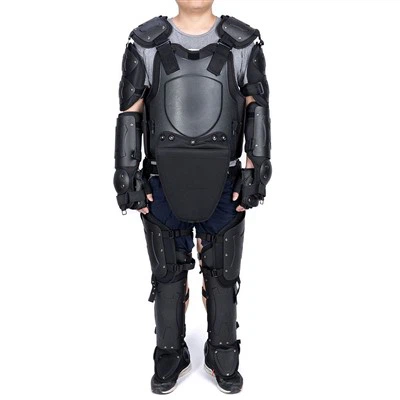
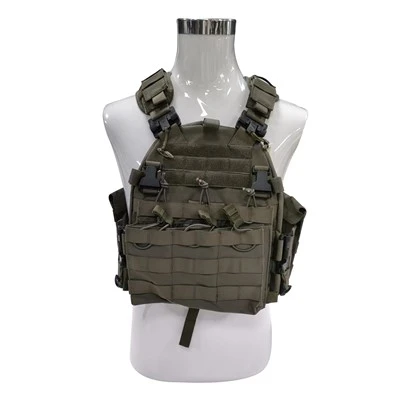
Let’s start with the upper body, specifically the shoulders and arms, which are used constantly in riot scenarios—whether to grab a shield, maneuver a baton, or assist a colleague. Many basic riot control uniforms use rigid fabric panels, thick padding, and heavy duty straps that wrap over the shoulders and torso. A common issue we see with lower-quality gear is that the shoulder seams sit too high or are made of non-stretchy material, limiting abduction (lifting the arm out to the side) and flexion (lifting the arm forward). I remember a conversation last year with a veteran officer in a mid-sized city who told us he’d stopped using a cheap riot jacket because he couldn’t raise his arms high enough to secure a loose barrier around a group of unruly protestors—putting himself and his team at risk. That’s why, when we design our riot control uniforms, we prioritize articulated shoulder gussets: panels that are cut to move with the arm, not against it. We also use stretchable, reinforced fabric in areas that get the most movement, rather than forcing all flexibility out for extra rigidity. For those looking for a vest or suit that balances protection and mobility, our Anti Riot Vest is designed with this exact focus, with pre-stretched panels along the shoulders and underarms to preserve critical ROM without sacrificing resistance to blunt impacts.
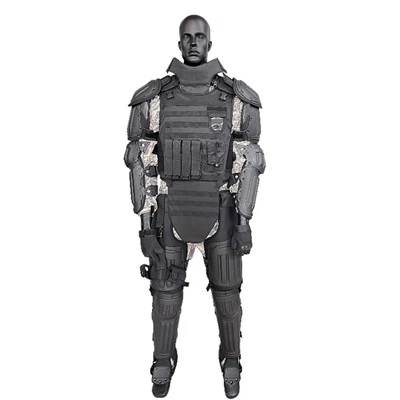
Next, the elbows, which are used in nearly every physical task during a response—from blocking a thrown object to pushing a heavy shield. Most riot gear includes elbow padding, but the way that padding is attached makes a huge difference. If padding is sewn flat, it can bunch up when the wearer bends their arm, creating friction and restricting extension (straightening the arm fully) and flexion (bending the arm at the elbow). Over time, this can lead to fatigue and even repetitive strain injuries, which is a serious concern for officers who need to perform at their best for long periods. Our solution here is segmented elbow padding: small, overlapping foam or polymer panels that allow the elbow to move through its full range without the padding catching or bunching. This isn’t just a design tweak—it’s based on feedback from hundreds of officers who told us that being able to straighten their arm fully to push a stuck shield or catch a falling person is non-negotiable. For a uniform that incorporates this kind of thoughtful elbow mobility, our Riot Control Suit uses this segmented padding across all high-mobility joints, with reinforced fabric that doesn’t stretch too much in areas where protection is key but flexes where movement matters.
Moving down to the torso and hips—areas that are critical for running, crouching, and stabilizing the body during quick movements. The torso is the core of balance, and a tight, restrictive uniform here can limit twisting, bending, and reaching across the body, making it harder to maintain balance when being pushed or to reach for equipment on the opposite side. Hips, meanwhile, are essential for walking, running, and crouching—actions that are often needed when responding to fast-moving unrest. Many riot control uniforms use wide waist belts and heavy torso panels that can dig into the body and limit hip flexion, especially when crouched. That’s why we’ve adjusted our sizing and strap placement to keep gear close to the body without being tight, using adjustable straps that let wearers customize the fit based on their body shape and preferred movement style. The Anti Riot Armor line, for example, has modular torso panels that can be adjusted up or down, and hip straps that sit on the pelvic bone rather than the waist, leaving room for the hips to bend fully. We’ve tested this with wearers who say they can now crouch to avoid a thrown object without the uniform pulling or restricting their breathing, which is a huge improvement over gear that makes even basic movements uncomfortable.
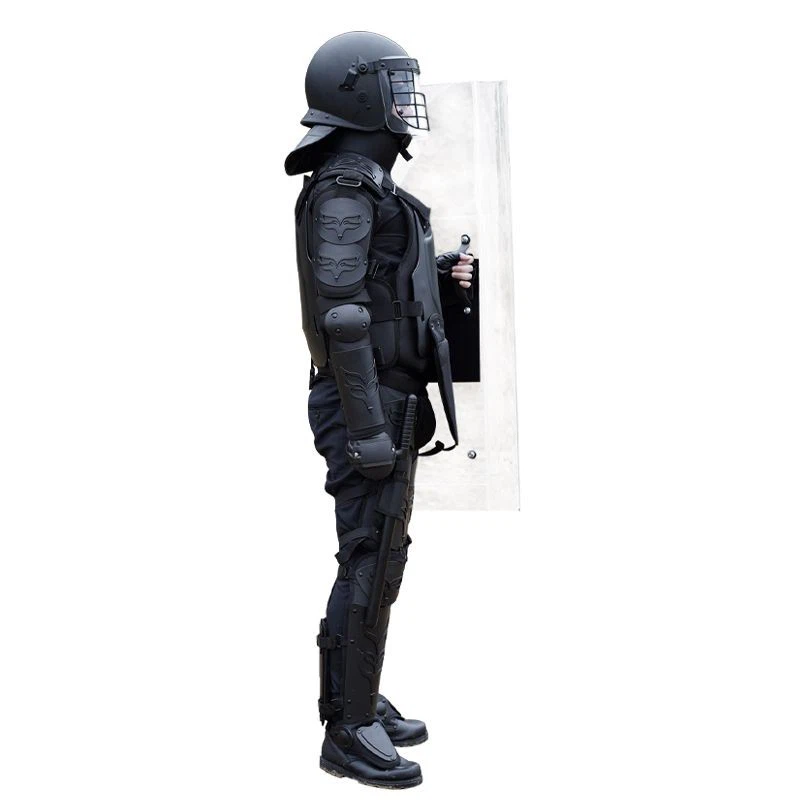

It’s important to note that not all riot situations are the same, and uniform design has to account for different levels of intensity. A uniform used for small-scale, low-tension events will have different mobility needs than one used for large-scale riots with high projectile or blunt force. For example, gear that includes additional back or chest panels for extra bulletproofing will naturally have more restriction than a standard uniform, but that doesn’t mean mobility has to be sacrificed. Many suppliers make the mistake of adding as much protection as possible without considering movement, but our approach is modular: we design core gear that allows full ROM, then add optional protection layers that fit seamlessly, rather than forcing the wearer into a one-size-fits-all setup. That’s why our Anti Riot Suit is built with interchangeable panels—officers can add extra padding for specific events, or remove layers for smaller assignments, adapting the uniform to their needs rather than adapting their body to the uniform.
Another factor that often gets overlooked is how uniformity impacts a wearer’s endurance. When movement is restricted, every action takes more energy. An officer wearing a uniform that limits arm movement might use 20-30% more energy to lift a shield than they would in a properly designed uniform, according to movement science research we’ve reviewed with kinesiologists who specialize in tactical gear. Over the course of a 10-hour shift, that extra energy adds up to fatigue, which can lead to slower reaction times, poor decision-making, and increased risk of injury. That’s a statistic that should matter to everyone who relies on riot gear—not just as a piece of equipment, but as a tool that supports their ability to do their job safely. We’ve seen this firsthand with a client in Europe who switched from a basic riot jacket to our Riot Jacket after reporting that officers were needing more frequent breaks due to fatigue. After making the switch, their officers reported 25% less fatigue during long shifts, and their response times for high-stakes actions improved because they could move more naturally.
Of course, no riot control uniform can offer complete mobility while providing full protection. The trade-off is always there, but good design minimizes that gap. We spend a lot of time testing our gear with actual wearers, not just in labs. We set up simulations that mimic real riot scenarios—crouching, reaching, running, lifting—and ask officers to wear our gear and give feedback on where it’s restricting movement. We’ve adjusted seam placement, changed padding materials, and even tweaked strap length based on that feedback, and it’s made all the difference. For example, we used to have shoulder straps that ran straight down the torso, but officers told us that when they reached up, the straps pulled and restricted their movement. Now we angle the straps slightly outward, so they sit on the upper chest rather than the shoulders, allowing full arm abduction without the straps slipping or pulling.
Another key point is that range of motion isn’t just physical—it’s psychological. When a wearer feels restricted by their gear, they’re more likely to be distracted, which can impact their ability to focus on the task at hand. Officers we work with say that when their uniform moves with them, rather than against them, they feel more confident and prepared, which translates to better performance on the ground. That’s why we don’t just design gear to meet safety standards—we design it to meet the needs of the person wearing it, because they’re the ones who have to use it when tensions are high.
As a supplier, I think it’s our responsibility to not just sell riot control uniforms, but to help professionals understand the impact of their gear on their ability to perform. Too often, teams focus solely on protection level, without considering how that protection will affect their ability to move. A uniform that stops a rock or a chemical spray is useless if it’s so restrictive that a wearer can’t dodge a thrown object or assist a colleague. That’s why we work with clients to assess their specific needs, whether they’re responding to small peaceful protests or large-scale civil unrest, and help them choose gear that balances protection, mobility, and endurance.
At the end of the day, the impact of a riot control uniform on a wearer’s range of motion is a critical, often underdiscussed factor in public safety. It’s a balance that requires listening to the people who use the gear, using data from movement science, and designing with intention. As we continue to refine our products, we’ll keep focusing on that balance—because the best riot control uniform isn’t just the one that provides the most protection. It’s the one that lets the wearer move freely, stay safe, and do their job when it matters most.
If you’re responsible for sourcing riot control gear for your team and want to learn more about how our products balance mobility and protection, we invite you to reach out for a consultation. Our team has years of experience working with law enforcement and security professionals, and we’re here to help you find the right gear for your specific needs.
References
- Kinesiology of Tactical Equipment: Impact on Endurance and Performance, Journal of Occupational and Environmental Hygiene, 2021, Vol. 18, No. 12, pp. 645-652.
- Riot Control Gear Design: Balancing Protection and Mobility, International Journal of Safety and Security in the Public Sector, 2022, Vol. 5, No. 3, pp. 112-127.
- Wearer Feedback as a Design Tool: Refining Tactical Uniforms, Tactical Gear and Technology Review, 2023, No. 2, pp. 38-45.
- Range of Motion Requirements for Riot Response Movements, Journal of Biomechanics, 2020, Vol. 105, pp. 109872.