If you’re reading this, chances are you’re either a security professional, law enforcement officer, or someone responsible for personal protection who’s recently added an expandable baton to their toolkit. As a supplier who’s worked with thousands of clients over the past decade, I can tell you: a baton is only as effective as the training behind it. A well-made tool like the Metal Telescopic Baton won’t do you any good if you don’t know how to deploy, control, and retract it safely. That’s why we’ve spent years refining training methods that balance practicality with safety, tailored to everyone from new recruits to seasoned officers. Let’s break down the most evidence-based, field-proven training techniques that should be at the core of any baton program.
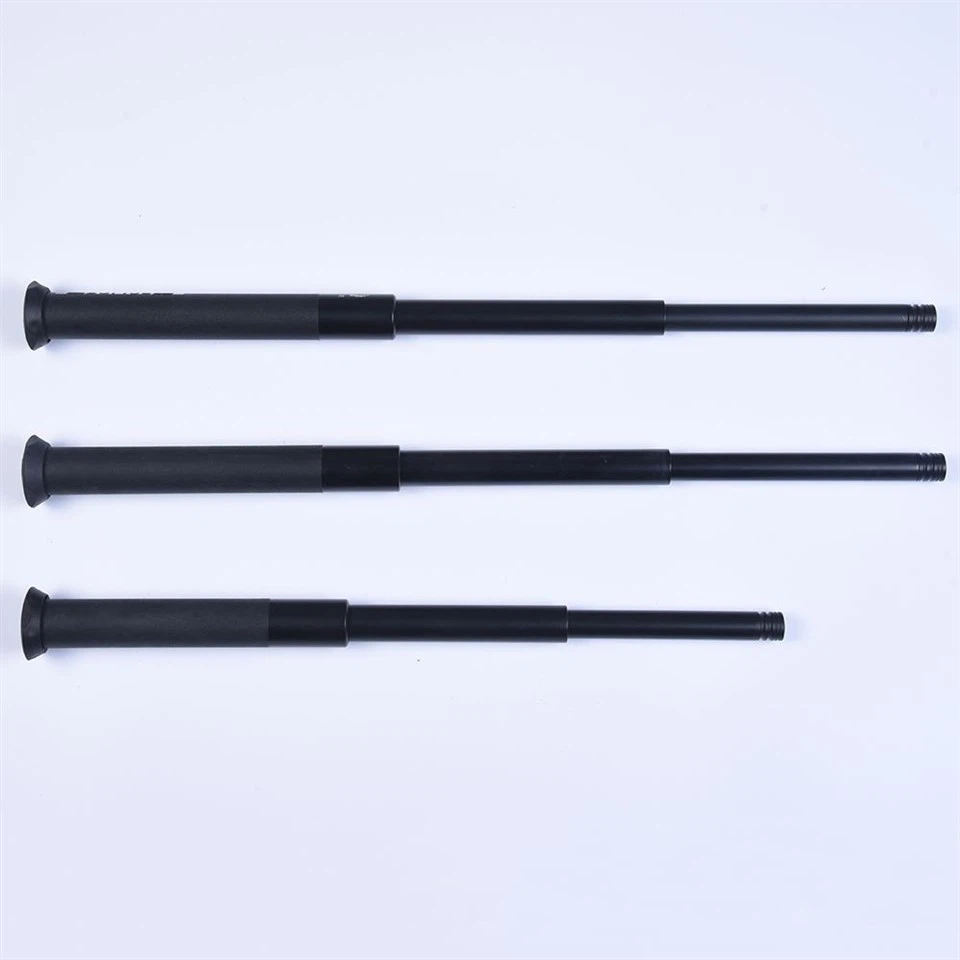

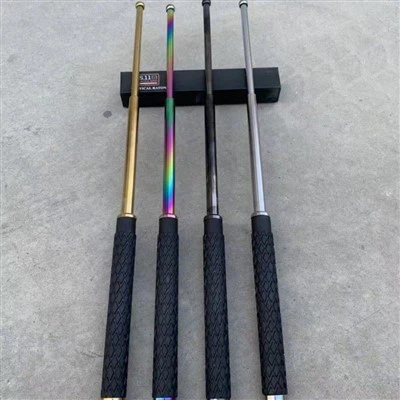
First, it’s critical to start with foundational education—because misuse of any telescopic baton, even a Police Metal Baton, can lead to injury, legal trouble, or wasted effort. The first training block shouldn’t involve physical drills; it should be about understanding the tool itself. Trainees need to learn the mechanics of how a telescopic baton works: the locking mechanism, how to ensure each section engages fully, and how environmental factors (like humidity or repeated use) can affect functionality. For example, a baton left in a holster for months without being retracted might develop debris in the locks, so trainees should practice pre-use checks every time they pick it up. We always recommend pairing this theoretical training with hands-on interaction with different models—our Telescopic Baton line includes both aluminium and alloy steel options, so trainees should test how each handles weight, deployment force, and retraction ease. An aluminium baton is lighter for long shifts, while an Alloy Steel Telescopic Baton offers more durability for high-stress scenarios—trainees need to feel the difference to choose the right tool for their role.
Once the fundamentals are covered, the next step is deployment training, which is where most new trainees make mistakes. Deploying an expandable baton is a quick, deliberate motion—not a swing. The key here is muscle memory, because in a threat situation, you won’t have time to think through each step. We use a two-phase deployment drill: first, dry practice (without the baton) to build the motion, then live practice with a training baton (not your carry model) to avoid accidental strikes. The ideal deployment starts with the baton stored in a forward-facing holster or grip, index finger along the shaft. On the command to deploy, the trainee grips the base of the baton firmly, then uses a snapping motion of the wrist and shoulder to extend the baton fully. A common error is stopping mid-deployment, which leaves the baton unstable and ineffective—so we use target dummies with pressure sensors to give immediate feedback: if the sensors register less than full extension, the drill is repeated until it’s consistent. For frontline officers, this drill should be practiced until a trainee can deploy the baton in less than a second, without looking down at it. For private security or personal use trainees, we adjust the pace slightly, focusing more on control than speed, since threats for civilian users are less likely to be sudden, high-intensity attacks.
After deployment, control training is the most important part of safe baton use. Strikes are only half the story—you need to know how to position the baton to manage a threat without overcommitting. This is where we emphasize “targeted strikes” rather than full-force swings. Trainees learn to strike only soft-tissue, non-vital areas of the body: the outer thigh, the forearms, and the side of the ribcage. Striking hard tissue (like the skull or kneecap) can cause permanent injury, which opens the door to legal liability for officers and civilians alike. We use padded shields for this drill, starting with stationary targets and moving to moving targets to simulate a resisting suspect. A technique we teach is the “lock control”: after a strike, you can use the baton to trap a suspect’s limb against their body, which helps subdue them without excessive force. This requires practice with grip strength and balance—trainees often find that a heavier alloy steel baton gives better lock control, while a lighter aluminium baton is easier to maneuver during quick adjustments. It’s important to note that control training also includes de-escalation: a baton is a last-resort tool, so we always pair baton drills with modules on when to draw the tool versus when to rely on verbal commands or other non-lethal tactics.
Retraction training is the most overlooked part of baton training, but it’s just as critical as deployment. A baton left extended is a hazard to you, bystanders, or anyone else nearby. Retraction requires pressing the release button firmly while holding the base of the baton, then pushing the sections back into place with a smooth, steady motion. Many trainees rush retraction, which can cause the baton to lock incorrectly or jam. We practice retraction drills in low-light environments and with gloved hands, since officers often wear gloves on duty and may need to retract a baton quickly in a dark alley. For civilian users, we also teach how to retract a baton with one hand, since you may need to use your other hand to call for help or steady yourself. A common mistake is not cleaning the baton’s locking mechanism before retracting—debris from dirt, sweat, or grass can get caught in the gaps, leading to a jam. That’s why our initial foundational training always includes a 5-minute module on baton maintenance, which ties directly to retraction reliability.
Beyond these core drills, ongoing refreshers are essential. Baton technique can fade if not practiced regularly, so we recommend monthly training sessions for active users, not just initial certification. We also teach scenario-based training, which simulates real-world situations that trainees might face: for example, a group of unruly bystanders, a suspect with a weapon, or a civilian who accidentally gets caught in a confrontation. In these scenarios, trainees have to deploy, control, and retract the baton while managing other variables—like communication with a partner, following department policies, or protecting bystanders. This type of training is where the value of a quality baton comes through: a well-made metal telescopic baton won’t jam mid-scenario, which lets the trainee focus on the situation instead of fixing their tool. For new clients, we often bring training batons to our demo sessions, so users can test how different models perform under stress.
I’ve seen too many clients buy a cheap, low-quality baton thinking it will protect them, only to have it fail during a critical moment. That’s why at our company, we don’t just sell batons—we provide training resources to ensure our products are used safely and effectively. Whether you’re looking for a reliable personal defense tool or a standard issue for your security team, the right baton paired with proper training can make all the difference.
If you’re a law enforcement agency, security firm, or individual looking to purchase expandable batons and learn more about tailored training programs, reach out to us. We’ve worked with organizations of all sizes to equip teams with tools they can trust and the skills to use them responsibly. Don’t wait until a threat arises—invest in training now, so you’re prepared when it matters most.
References
- National Institute of Justice. (2018). Less Lethal Weapons: A Guide for Law Enforcement. U.S. Department of Justice.
- International Association of Chiefs of Police. (2020). Best Practices for Expandable Baton Training and Use. IACP Publications.
- Occupational Safety and Health Administration. (2019). Workplace Violence Prevention Tools and Training. OSHA.
- Journal of Security Education. (2021). “The Impact of Tactical Tool Training on Security Officer Performance.” Volume 15, Issue 2.
- Personal Protection Equipment Association. (2022). Safety Guidelines for Expandable Baton Use. PPEA Industry Standards.