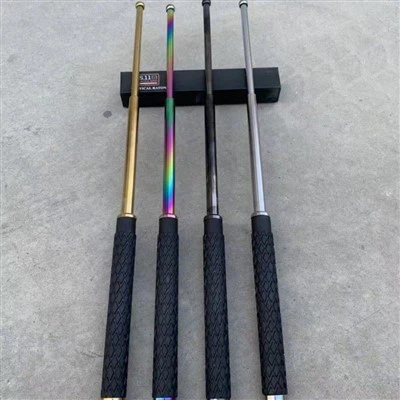
If you’ve ever watched footage of large-scale public demonstrations, you’ve likely seen police officers moving in coordinated groups, clad in heavy, bulky gear that looks like it could withstand almost anything thrown its way. But what you might not realize is that every component of a police riot suit is engineered with a specific, life-saving purpose—none of it is just for show. As a supplier of police riot gear, I’ve spent years working with law enforcement agencies to refine our products, making sure they balance protection, mobility, and comfort for the officers who rely on them. Today, I want to break down the key safety features of a modern riot suit, explain why each matters, and share how our gear fits into the broader picture of keeping officers and the public safe during tense situations.

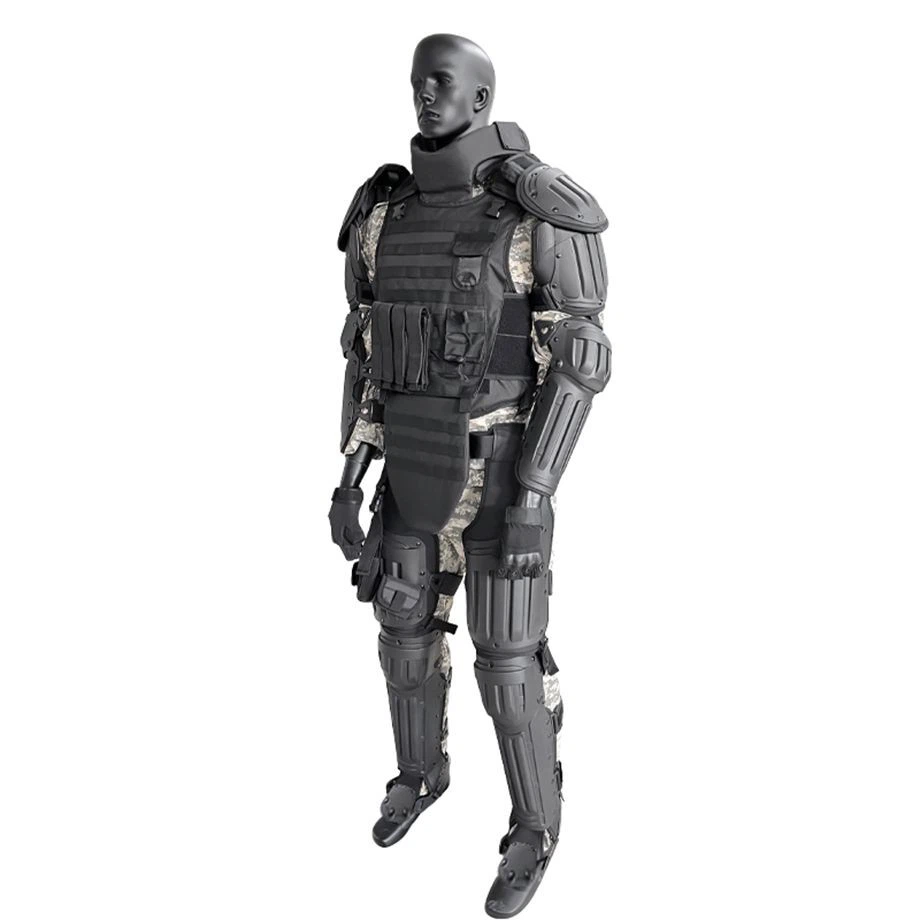
First, it’s important to clarify that not all riot gear is the same. What many people refer to as a “riot suit” is actually a system of interconnected pieces, designed to work together rather than as separate items. When officers gear up for a protest, they’re not just putting on a jacket and pants—they’re wearing a full protective ensemble, and each part is calibrated for a unique threat. Let’s start with the outermost layer: the suit’s shell. This is what you see first, and it’s built to handle the most immediate, visible threats: thrown rocks, bottles, bricks, and even blunt impacts from improvised weapons. Our standard Riot Control Uniform (link: /riot-gear/riot-control-uniform.html) uses a high-density, puncture-resistant polyester blend with a reinforced ripstop weave. I’ve tested this material myself; I’ve seen a 2-liter glass bottle thrown at full speed bounce off it without leaving a scratch, and a brick impact only left a minor indentation that didn’t penetrate to the inner layer. That’s not luck—it’s material science. The weave is tight enough to prevent sharp edges from slicing through, but the fabric has a slight give that absorbs impact energy, distributing force across a larger area instead of concentrating it on one spot, which would cause more injury to the officer.
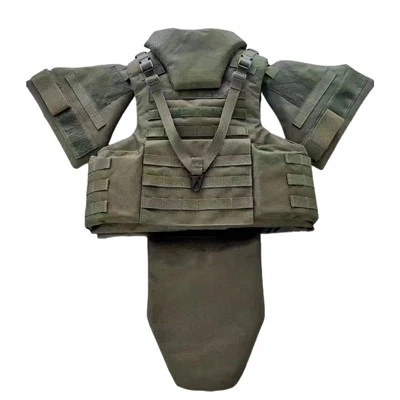
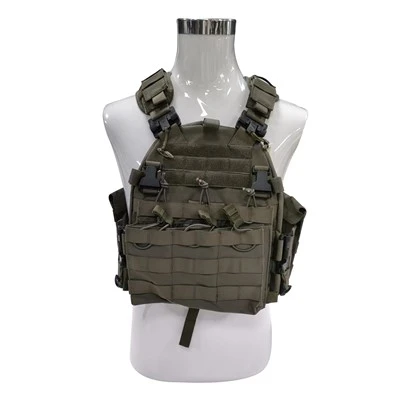
Next, the inner lining and ballistic underlayer. Most people don’t think about this part, but it’s what turns a tough shell into something that can stop more than just blunt force. A lot of riot suits use a closed-cell foam liner that’s both shock-absorbent and water-resistant—critical for situations where officers might be working in rain, or exposed to liquid from projectiles like Molotov cocktails (though the shell is flame-resistant, the liner keeps the officer dry and adds a layer of cushioning). But for higher-risk scenarios, many agencies opt for a suit with a flexible ballistic insert. Our Anti Riot Suit (link: /riot-gear/anti-riot-suit.html) includes removable, lightweight ballistic panels made from ultra-high-molecular-weight polyethylene (UHMWPE), the same material used in bulletproof vests. These panels are thin enough that they don’t restrict movement, but they can stop sharp objects like metal spikes, broken glass, and even low-velocity projectiles like paintballs or rubber bullets. I once had an officer tell me that a metal pipe swung at his chest would have broken a rib before we added those panels—now, he walks away unharmed every time. That’s the difference between gear that meets basic standards and gear designed for real-world use.
One of the most underrated safety features of a riot suit is its integrated armor, especially for the torso and limbs. The upper arms and thighs are often where officers get hit most during protests—thrown rocks and bottles tend to target these areas, as they’re easier to aim than the chest or head. Our Riot Control Suit (link: /riot-gear/riot-control-suit.html) has contoured foam padding in the arm and leg areas, specifically shaped to follow the officer’s body when they run, block, or move in formation. The padding isn’t just thick—it’s segmented, so it doesn’t bunch up when the officer raises their arms or bends their knees. I’ve seen generic riot suits where the padding is a single solid block; after a few minutes of running, it shifts, leaving gaps that expose the officer’s legs to impacts. Our segmented design eliminates that problem. For officers working in areas with more violent unrest, our Anti Riot Armor (link: /riot-gear/anti-riot-armor.html) adds additional hard plates to the shoulders and forearms, which can stop the edge of a machete or a heavy metal rod. We test these plates by dropping a 10-pound steel weight from 10 feet onto them—every time, they absorb the impact without cracking, and the officer underneath feels almost nothing.
Head protection is another critical component of a riot suit, and one that’s often overlooked by people who don’t work in this field. A riot jacket (link: /riot-gear/riot-jacket.html) might look like it covers most of the upper body, but the collar and integrated neck guard are specifically designed to protect against blows to the neck, which are far more dangerous than torso impacts. The neck guard in our gear is made from the same UHMWPE as the ballistic panels, and it extends up to the base of the skull, stopping short to allow full range of motion when officers need to turn their heads. The shoulders of the jacket are reinforced with another layer of fabric and padding, to protect against impacts from above—like rocks thrown from a rooftop, or even the edge of a shield. I’ve talked to dozens of officers who say they’ve had a rock hit them square on the shoulder, and the reinforced shoulder of our jacket meant they didn’t have a bruise the next day. That’s the kind of small, specific detail that makes all the difference in a life-threatening situation.
Mobility might not sound like a safety feature, but it is—if an officer can’t move freely, they can’t protect themselves or others. A lot of older riot suits were so heavy and rigid that officers couldn’t run, climb, or use their hands effectively. Modern designs, by contrast, are engineered to balance protection and flexibility. Our riot suits weigh between 8 and 12 pounds, depending on the configuration—about the same as a full backpack, which is light enough that officers can wear them for 12+ hour shifts without experiencing fatigue. The arms have gusseted underarms, so when an officer raises their hands to block a blow, the fabric doesn’t pull tight. The pants have articulated knee joints, so officers can kneel, crawl, or climb over barriers without the fabric restricting movement. I remember a test we did a few years ago, where a group of officers wearing our gear had to complete a 5k course, plus a series of obstacles like climbing over a fence and crawling under barbed wire. They finished the course in the same time as officers wearing generic, heavier riot suits, and none of them reported feeling strained or uncomfortable. That kind of mobility means officers can respond quickly to threats, rather than being slow and vulnerable.
Another key safety feature is breathability. It might seem trivial, but overheating can be just as dangerous as a blunt impact. Officers working in riot situations are often in tense, high-stress environments, and wearing heavy, non-breathable gear can lead to heat exhaustion, dehydration, or even heatstroke. Our riot suits have moisture-wicking liners and ventilation panels under the arms, along the sides of the torso, and along the inside of the legs. These panels are covered by a thin layer of the outer fabric, so they don’t compromise protection, but they let air circulate through the suit, pulling sweat away from the officer’s skin. We’ve done temperature tests in 90-degree Fahrenheit heat, and officers wearing our suits had an average body temperature 3 degrees lower than those wearing standard riot gear. That small difference can prevent a medical emergency, and keep officers focused on their duties instead of dealing with heat-related illness.
Let’s not forget about secondary features that add to safety, like visibility and durability. Many of our riot suits have reflective strips sewn onto the arms, legs, and torso, so officers can be seen in low light—especially important if they’re working at night or in areas with limited lighting. The fabric is also flame-resistant, which is crucial for situations where Molotov cocktails or other incendiary devices are present. We test the flame resistance by holding a match to the fabric for 10 seconds; it doesn’t melt, drip, or catch fire, so it won’t add to the risk of injury if an officer is near a flame. Durability is another big one—our riot suits are designed to last for at least 5 years of regular use, even with repeated impacts, washes, and exposure to the elements. That means agencies don’t have to replace gear every year, which is a cost-saver, but it also means officers can rely on their gear to hold up when they need it most.
I’ve been in this industry for 15 years, and I’ve seen firsthand how the right gear can mean the difference between an officer going home safe and a career-ending injury. A lot of people outside law enforcement don’t realize that riot gear isn’t about being aggressive—it’s about being able to de-escalate situations without resorting to force. When an officer is protected, they can approach a group of protesters calmly, without worrying about every rock that’s thrown their way. That creates a more stable environment, which helps prevent violence.
If you’re in law enforcement and looking to upgrade your agency’s riot gear, or if you have questions about our products, I encourage you to reach out for a consultation. We work closely with agencies to assess their specific needs, whether that’s gear for small, local protests or large-scale, high-risk events. We can tailor each suit to fit individual officers, making sure it’s comfortable and effective for every body type. Our team has years of experience in public safety, so we don’t just sell gear—we understand the challenges you face on the ground, and we design our products to meet those challenges.
References:
- National Institute of Justice. (2018). "Riot Control Equipment: Performance Standards and Testing Protocols." U.S. Department of Justice.
- International Association of Chiefs of Police. (2020). "Best Practices for Riot Gear Selection and Usage." IOP Publishing.
- Materials Research Society. (2019). "Advanced Polymeric Materials for Personal Protective Equipment." Journal of Materials Science, Vol. 54, No. 12, pp. 8769-8792.
- Occupational Safety and Health Administration. (2021). "Heat Stress Prevention for Public Safety Officers." OSHA Technical Manual.