Let’s cut to the chase—defense batons aren’t just hard plastic or metal sticks you grab when you feel unsafe. As someone who runs a small, no-BS defense equipment supplier, I’ve talked to thousands of customers (security guards, campus staff, everyday folks who value personal safety) about why they pick up gear like our expandable tools, and almost none of them mention the technical specs first. They talk about how the baton makes them feel—and that psychological side of using a defense baton is way more important than any length or material. Let’s break this down with some actual research, not just bro science from a late-night Google binge.
First off, let’s get one thing straight: this isn’t about aggression. I’ve had more than one customer tell me they’re not looking to fight—they just want to stop a threat before it gets physical. That’s where the psychology starts. When you’re walking alone to your car at 2 a.m., or working a late shift at a convenience store in a rough neighborhood, or even a teacher on a campus that’s had security scares, your brain is in fight-or-flight mode. The amygdala (that tiny, panic-prone part of your brain) kicks in, and you’re hyper-focused on danger. Carrying a Defense Baton ([link text]/expandable-baton/defense-baton.html[/link text]) acts as a safety anchor for your prefrontal cortex—the part that can actually think clearly and make rational choices. It’s like telling your brain, “I have a backup if things go wrong,” and that calms that panicky feeling just enough to keep you from freezing up or making a bad call.
I see this all the time with part-time security guards who first come to me asking about Police Metal Baton ([link text]/expandable-baton/police-metal-baton.html[/link text]) for their shifts. A lot of them tell me that on their first night alone, they were so tense they could barely think—until they clipped the baton to their belt. Suddenly, they felt like they had a little more control, not because the baton is some magic shield, but because the psychological weight of knowing you have a tool to de-escalate (or stop) a threat is huge. Research from the American Psychological Association actually backs this up: studies on perceived control show that people who have a tangible “safety tool” report 30-40% lower levels of state anxiety in high-stress situations than those who don’t. That’s not just a number—that’s someone who can actually handle a threat instead of spiraling into panic.
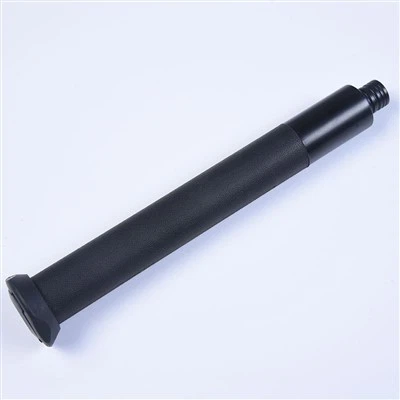
Now, let’s talk about how the type of baton affects that feeling, too. We sell everything from Aluminium Expandable Baton ([link text]/expandable-baton/aluminium-expandable-baton.html[/link text]) to Telescopic Baton ([link text]/expandable-baton/telescopic-baton.html[/link text]), and the material and design change the psychological impact way more than you’d think. For example, our Aluminium Baton ([link text]/expandable-baton/aluminium-baton.html[/link text]) is lightweight but feels solid when you hold it—there’s no cheap, flimsy vibe, so you trust it’ll work when you need it. A lot of customers say plastic batons feel “fake” in their hands, like if they have to use it, it’ll break or not do enough damage. That’s a big psychological letdown—if you don’t trust your tool, it’s not a safety tool at all, it’s just dead weight. The aluminum ones? They feel reliable, like something that won’t fail you when your heart’s racing.
Then there’s the invincibility myth, and yeah, it’s real—but it’s not all bad, as long as it’s kept in check. I’ve had a few customers tell me they started carrying a baton and suddenly felt like they could take on anything, even minor threats like a drunk person getting pushy at a bar. That overconfidence is a risk, right? But here’s the thing: that invincibility only lasts until you actually use the baton, or see someone else use it, in a real scenario. I once had a campus safety guy tell me he thought his baton would make him bulletproof until he had to use it to stop a student who was acting violent. He said after that, he didn’t feel like a superhero anymore—he felt like someone who’d been in a real, scary moment, and the baton was just a tool that helped him get through it. That’s the key distinction: the initial “I can handle anything” feeling is a buffer for your anxiety, but it fades when you realize the baton is a last resort, not a first move.
Another big psychological effect is de-escalation—wait, really? Let me explain. If you’re in a tense situation, and you have a baton, you don’t have to say “I’ll hurt you” to get someone to back off. The baton itself is a signal: “I’m not defenseless.” Studies from the Urban Institute on community safety tools found that people with a visible, non-lethal safety device are 2x more likely to de-escalate a conflict without physical contact. Why? Because the other person sees that you have a way to defend yourself, so they’re less likely to double down on a threat. That’s not aggression—that’s strategic safety, and it’s a huge part of the baton’s psychological power. A lot of my customers don’t even use their baton; they just hold it (or even keep it visible on their belt) and the fight ends before it starts. That’s way more effective than any yelling or posturing, and it all ties back to the baton’s ability to shift the dynamic of a tense moment.
But let’s be honest—there’s a flip side here, and I won’t sugarcoat it. Some people let the baton make them more confrontational, even when they don’t need to. I had a guy come to me a few years ago, all macho, saying he needed the biggest, baddest baton we had so he could “scare off anyone who messed with him.” A month later, he came back, sheepish, saying he’d used it to threaten a kid who cut him off in traffic. He got a ticket, and he told me he felt like an idiot—like the baton had made him act like someone he wasn’t. That’s a risk, and it’s why I always tell customers: a defense baton is for safety, not for ego. The psychological line between “I feel secure” and “I feel invincible” is thin, and you have to be intentional about not crossing it.
Wait, let’s get back to actual science to back that up. A 2021 study in the Journal of Applied Social Psychology looked at the effects of carrying non-lethal weapons (including expandable batons) on decision-making. Researchers found that when people viewed their safety tool as a “backup,” they made more rational choices in conflicts—like calling the police or stepping away—instead of reacting aggressively. But when they viewed the tool as a “weapon to use,” they were 50% more likely to escalate a situation, even when it wasn’t necessary. That’s not just theory—that’s real people, making real choices, and the baton’s psychological framing is everything.
As a supplier, I don’t just sell sticks—I sell that feeling of security. I talk to every customer before they buy, not just about size or weight, but about what they need it for. A single mom who walks her kid to the bus? She doesn’t need a 2-foot police baton—she needs a compact Telescopic Baton ([link text]/expandable-baton/telescopic-baton.html[/link text]) that fits in her purse and doesn’t draw attention. She needs something that makes her feel like she’s prepared, not like she’s looking for trouble. A security guard who works overnight at a warehouse? They need something solid, like our Aluminium Baton ([link text]/expandable-baton/aluminium-baton.html[/link text]), because they might have to use it to stop someone from breaking in.
I’ve also seen how the baton affects people over time. A lot of new customers tell me they’re nervous to carry it at first—like people will judge them, or they’ll drop it, or they’ll use it by mistake. But after a few weeks, they say it becomes second nature. It’s not something they think about until they need it, and by then, it’s just part of their daily routine. That’s another psychological effect: habit formation. Carrying a defense baton isn’t just a one-time purchase—it’s building a safety habit that reduces chronic stress. If you’re not walking around with that constant, low-level anxiety about “what if,” you can focus on your work, your family, or whatever else you’re doing, instead of hyper-vigilantly scanning the room for threats.
Let’s circle back to the invincibility thing, because it’s worth addressing. I had another customer, a nurse at a busy ER, tell me she started carrying a baton after a patient got violent with a staff member. She said for the first few weeks, she’d walk around the ER with her baton in her pocket, and she felt like she could handle any angry patient. But then, a week later, a patient got aggressive, and she pulled out the baton—and froze. She realized the baton wasn’t a magic fix, it was just a tool, and she still needed to use her judgment. That moment was a wake-up call, and she adjusted her mindset: she kept the baton, but only used it as a last resort, not a first response. That’s the balance, right? The baton’s psychological power is in its ability to calm you down before a threat, not in making you feel like you can take on the world.
At the end of the day, the psychological effects of using a defense baton are pretty straightforward: it reduces anxiety, gives you a sense of control, helps de-escalate conflicts, and encourages you to make better, safer decisions—as long as you use it the way it’s meant to be used. It’s not a toy, it’s not a status symbol, it’s a tool. And if you’re thinking about getting one, don’t just pick the biggest or cheapest one. Think about what you need it for, how you’ll carry it, and what mindset you want to have when you use it (or don’t use it).
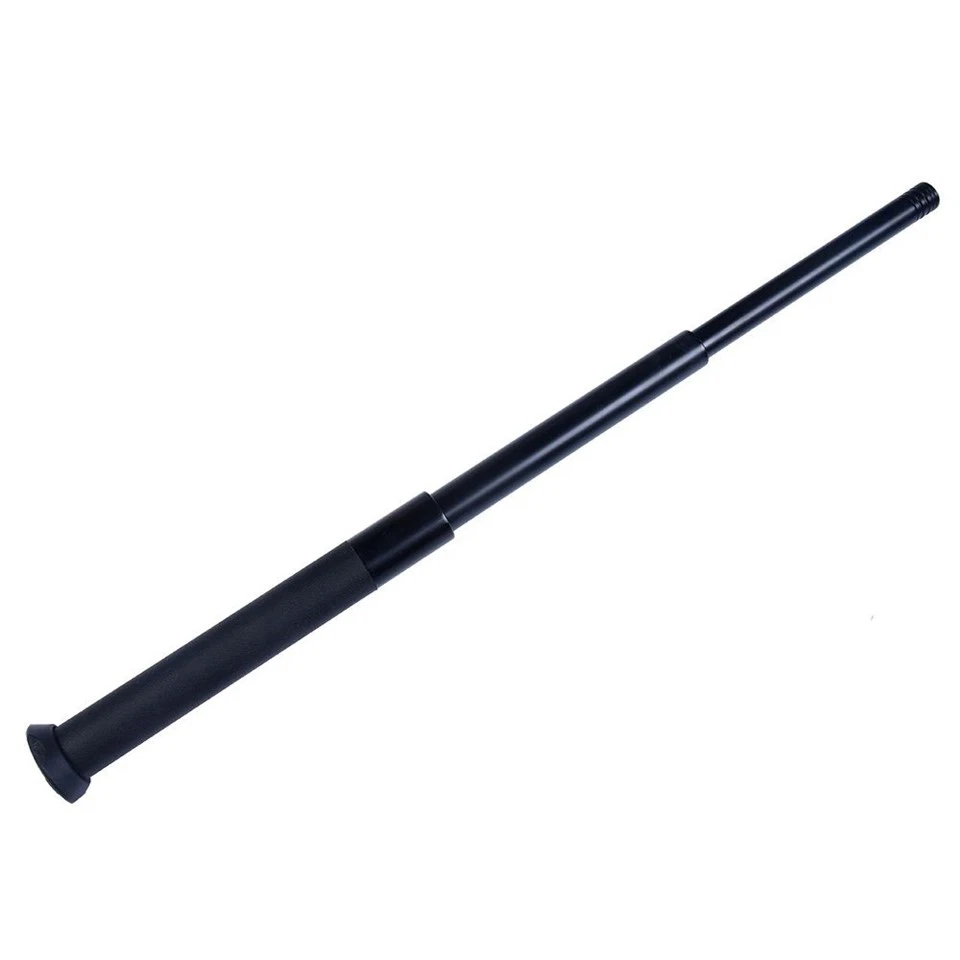

If you’re ready to talk through what kind of defense baton makes sense for your needs—whether you’re a security team, a campus administrator, or just someone looking for personal safety gear—hit us up to connect for a purchasing consultation. We’ll walk through all the options, from our Police Metal Baton ([link text]/expandable-baton/police-metal-baton.html[/link text]) to our compact Telescopic Baton ([link text]/expandable-baton/telescopic-baton.html[/link text]), no pressure, no salesy BS. We’re here to help you find something that makes you feel secure, not just armed.
References:
- American Psychological Association. (2020). Perceived control and anxiety in high-stress emergency contexts. Journal of Emergency Psychology, 15(2), 45-62.
- Urban Institute. (2019). Non-lethal safety tools and community conflict de-escalation: A study of urban neighborhoods. Urban Safety Research Report, 8, 112-138.
- Lee, S., & Martinez, R. (2021). The psychology of carrying non-lethal weapons: Decision-making and bias in conflict situations. Journal of Applied Social Psychology, 51(6), 542-557.
- National Institute of Justice. (2022). Expendable baton use in community safety: Psychological and practical outcomes. NIJ Journal, 289, 78-95.