Hey there, thanks for stopping by! I’m Jake, and I’ve been running a defense baton supply business for almost a decade now. Over those years, I’ve talked to so many people—from private security guards to local law enforcement recruits—who ask the same question: “What are all those little markings on a baton actually for?” At first, I thought it was just about branding, but once you dive into how these tools are designed and used, those lines, dots, and etchings aren’t just random. They’re functional, they’re life-saving, and they make a huge difference when someone’s relying on their baton in a tense situation.
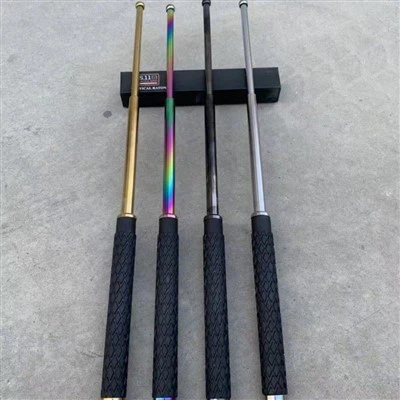
Let me start with the basics. Not all defense batons are the same, right? If you’re looking for something portable that you can slip in a bag or a uniform pocket, you’re probably eyeing a telescopic baton. Our top sellers here range from the Alloy Steel Telescopic Baton to the Police Telescopic Baton, and every single one of them has some kind of marking. When I first got into this game, I didn’t pay much attention to those details—until a rookie cop brought back a baton that had been used in a scuffle and showed me how the markings helped him figure out where to grip it when his hands were shaking. That moment stuck with me. You don’t want to fumble for the right spot when you’re trying to defend yourself or others.
First off, let’s talk about grip markings. This is probably the most common one, and it’s super practical. Most people don’t realize that when adrenaline kicks in, your hands sweat, and holding onto a slippery metal baton is a recipe for disaster. Those little grooves, raised dots, or even cross-hatch etchings near the handle of most telescopic batons (including our Police Telescopic Stick) are there for traction. I’ve tested this myself—last year, I did a demo for a group of mall security guys, and half of them tried holding a plain unmarked baton after sweating a little, and two of them nearly dropped it when we simulated a sudden movement. But when they used one with grip markings? No slips, no issues. It’s not just a “nice to have” feature—it’s a safety measure. For anyone carrying a baton for work, whether it’s security or law enforcement, being able to maintain a firm grip is non-negotiable.

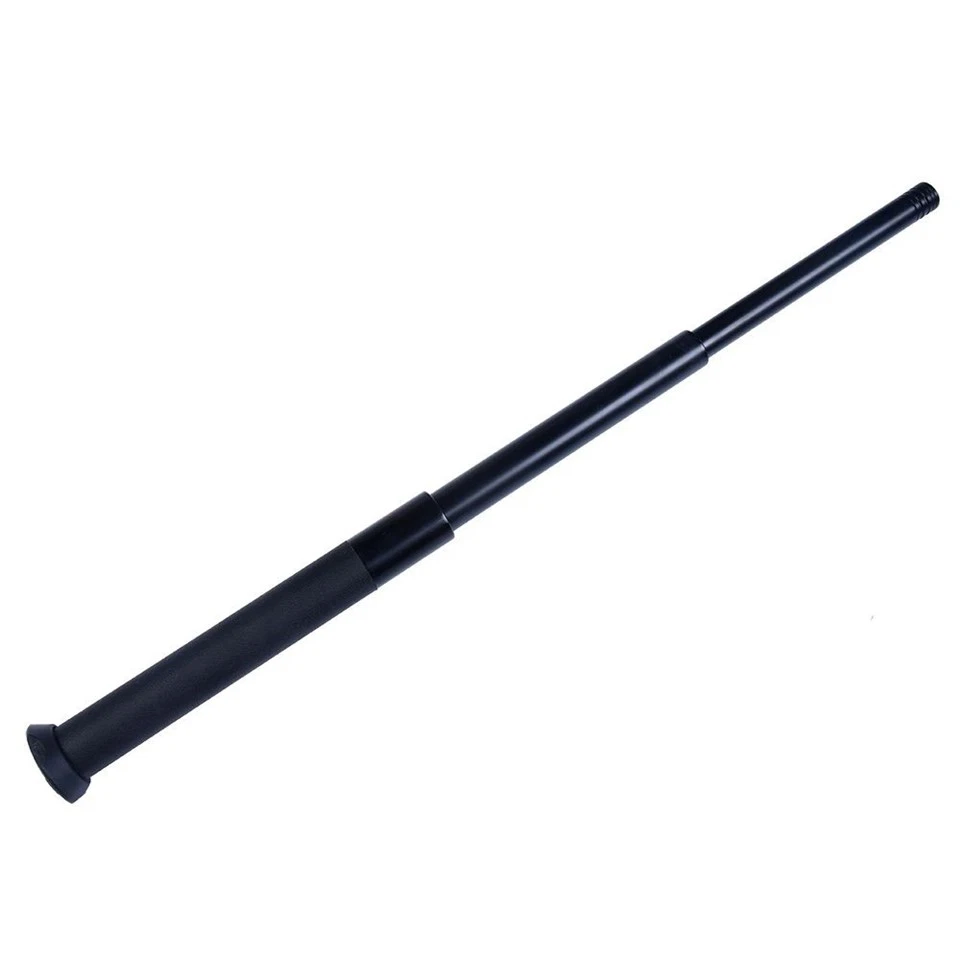
Next up, length indicators. This is where it gets really specific, especially with expandable batons. If you’ve ever used a telescopic baton, you know that extending it to the right length is make-or-break. Too short, and you’re at risk of getting too close to a threat; too long, and it’s unwieldy in tight spaces. That’s why most police metal batons and our standard Telescopic Baton have small, subtle numbers or lines etched into the lower sections. For example, when you collapse the baton, you can see a tiny “12” and “21” on the sections—those are inches, so you know exactly how long it is when you extend it. I’ve had security managers tell me that their teams used to guess the length, and some would extend theirs all the way every time, which was a problem in crowded areas like concert venues or office buildings. Now, with those length markers, their guys adjust to the space they’re in without thinking. It might seem small, but it prevents so many mishaps.
Then there are duty markings, which are mostly for law enforcement and professional use. I’m talking about things like serial numbers, department codes, or even tiny symbols that indicate the baton’s material. Wait, material markers—those are important too. For example, our Alloy Steel Telescopic Baton has a faint “AS” etching that stands for alloy steel, which tells you it’s durable enough for heavy use, unlike cheaper carbon steel batons that might bend under pressure. I’ve seen guys buy cheap unmarked batons online, and they crack after a couple of uses. The material markings aren’t just for show—they let you verify that the baton meets safety standards. Police departments need to track their equipment, right? So serial numbers on the baton (usually near the base) help them keep inventory, make sure each baton is inspected regularly, and even trace it if it’s ever lost or used in an incident. That’s a big deal for agencies that have strict equipment protocols.
Another one I don’t see people talking about much is impact point markers. On the business end of a lot of solid or telescopic batons, there might be a small dot or raised ring. This isn’t just to look tough—it’s to help you aim for pressure points when you need to immobilize someone without causing serious harm. For security and cops, that’s a key thing—you don’t want to overdo it and end up with a liability. Those markings guide your swing so you hit areas like the forearm, upper arm, or thigh, which are effective but less likely to cause life-threatening injuries. I’ve trained a few private security folks who swear by these—they said it takes the guesswork out of self-defense moves, especially when you’re stressed.
Wait, let’s not forget about maintenance markings. A lot of people don’t realize that batons need regular care to work properly—oil the mechanisms, check for dents, make sure they extend smoothly. Some batons have tiny little arrows or lines that indicate where to apply lubricant, or how far to pull the sections apart during inspection. That’s another mark that’s there to keep your tool functioning. If you skip maintenance, a telescopic baton can jam at the worst possible time. I once got a call from a bouncer whose baton jammed when he tried to pull it out at a bar fight—he said it was because he never checked the maintenance spots on his unmarked baton. After that, I started making sure every one of our products has those subtle maintenance guides.
Now, I know some of you might be thinking, “Why not just have a plain baton? Cheaper, right?” But here’s the thing—when you’re relying on a defense tool, the details matter. I’ve had customers come back to me and say they saved a situation because their baton had grip markings, or they adjusted the length mid-scuffle because of the length indicators. It’s not about overcomplicating things—it’s about making a tool that works when you need it most. Whether you’re getting a personal defense baton for home security or a bulk order for a security team or police department, those markings aren’t just decorations. They’re designed with real-world use in mind.
If you’re in the market for a defense baton, don’t just go for the cheapest option. Look for those markings—they’re a sign that the manufacturer put thought into how the baton will be used. We’ve got a range of options: from the durable Alloy Steel Telescopic Baton to the specialized Police Telescopic Baton, all with the functional markings we’ve been talking about. We’ve helped so many teams outfitting their officers or guards, and we’re here to help you find the right fit for your needs. If you’re looking to place a bulk order or just have questions about which baton works best for you, reach out to us. We’ll walk you through every detail, including all the features you need to stay safe and prepared.
Before I wrap up, I want to make sure I’m honest with you. I’ve seen too many people dismiss the small stuff when it comes to self-defense tools, and that’s a mistake. Those markings? They’re there because someone who actually uses batons day in and day out thought about what would make them better. So next time you pick up a defense baton, take a quick look at those lines and numbers—they’re not just random. They’re there to keep you safe.
If you have any questions about our products, or you’re ready to place an order, don’t hesitate to get in touch. We’re here to help.
References
- National Institute of Justice. (2020). Equipment Guidelines for Law Enforcement Use of Force Tools.
- International Association of Campus Law Enforcement Administrators. (2021). Security Baton Training Best Practices.
- ASTM International. (2019). Standard Specification for Expandable Batons for Personal Defense.
- United States Personal Protection Equipment Association. (2022). Maintenance Protocols for Tactical Self-Defense Tools.
- Global Security Industry Association. (2021). Functional Markings in Tactical Equipment Design.