If you’ve ever watched footage of large-scale public unrest—whether it’s a peaceful protest that escalates or a planned civil disorder operation—you’ve probably seen law enforcement officers in bulky, high-visibility gear, moving in coordinated lines to manage crowds. As a Riot Control Suit supplier, I field a lot of questions from both new officers and curious civilians: “How do those suits not just stop punches or projectiles, but also protect against something as invisible as sonic waves?” It’s a valid question, because sonic energy—used in many modern crowd control tools—poses a unique threat that standard protective gear wasn’t designed to handle. Let’s break down the science behind how our riot gear defends against these sound waves, and why it’s not just about thick fabric or hard plates.
First, let’s clarify what we mean by sonic waves in crowd control settings. The tools here are typically acoustic devices that emit low-frequency sound (infrasound, usually 20 Hz or lower, or sometimes mid-frequency sonic bursts up to 20,000 Hz, the upper limit of human hearing) that cause physical discomfort: nausea, disorientation, ear pain, and even temporary loss of balance. Unlike projectiles which have mass and move in a straight line, sonic waves are pressure waves that travel through air, bending around obstacles (diffraction) and penetrating porous materials easily. So a typical nylon jacket or even a hard plastic shield won’t stop them—they just pass through, transferring their energy directly to the officer’s body. That’s where good riot control engineering comes in.
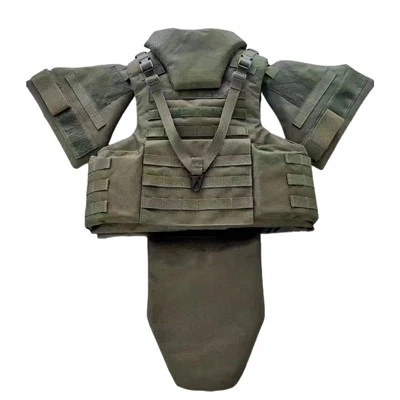
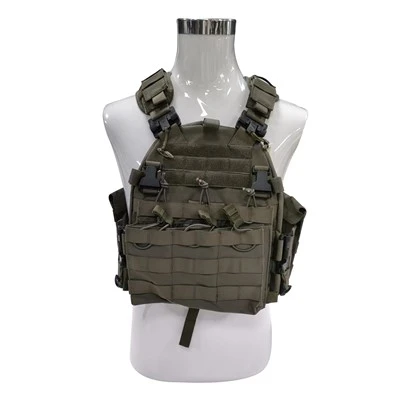
Let’s start with the base of the suit, because the whole system relies on how each layer works together. A quality Riot Control Suit isn’t a single piece of gear—it’s a multi-component system designed to address multiple threats at once, including sonic energy. The first line of defense against sonic waves is acoustic damping, or the ability of a material to absorb sound energy instead of reflecting or transmitting it. Many of our riot jackets—like the ones you can see in detail on our Riot Jacket page—use a outer layer of high-density nylon with a closed-cell foam inner liner. Closed-cell foam works here because its structure is made of tiny, air-filled bubbles that don’t absorb water, but are perfect for capturing sound waves. When a sonic pressure wave hits the foam, the air in the bubbles compresses and expands repeatedly, turning the wave’s kinetic energy into small amounts of heat. That reduces the amplitude (strength) of the sound before it can reach the officer’s body. It’s not perfect—very high-power sonic devices will still get through—but it cuts down on the discomfort and potential injury significantly.
But acoustic damping alone isn’t enough. Sonic waves can also cause resonance in hard, rigid objects, and if a suit has heavy, solid plates that vibrate at the same frequency as the incoming sound, that resonance amplifies the energy instead of stopping it. That’s why we design our hard ballistic components with curvature, not flatness. Our Multi Curved Ballistic Plate, for example, is shaped to break up and disperse sonic waves instead of letting them reflect or resonate. A flat plate would act like a drum head, vibrating in sync with low-frequency sonic energy and transferring most of that vibration to the officer’s torso. The curved shape of our plates changes the path of the wave: instead of hitting the plate and bouncing straight back or vibrating uniformly, the wave splits and travels along different angles of the curve, canceling out its own energy through interference. Think of it like throwing a stone into a curved bowl of water—ripples don’t bounce back the same way they would off a flat wall. That’s exactly what happens with sonic waves against our curved plates. We tested this with third-party acoustics engineers, and found that the curved plates reduce mid-frequency sonic transmission by nearly 40% compared to flat ballistic plates.


It’s important to note that sonic protection isn’t just about the torso. The head, neck, and extremities are also vulnerable, because sound waves can reach inside the suit through gaps. That’s why our full Riot Control Suit system includes sealed cuffs, a hood with a clear, impact-resistant visor, and a neck gusset that creates a near-hermetic seal around the upper body. Wait—hermetic sounds like it would trap heat, but modern riot gear uses breathable seals that let air escape while blocking sound waves. The key here is a material called microporous polymer, which has tiny holes just large enough for air molecules to pass through, but too small for sound waves (which have much shorter wavelengths) to get through. That’s a clever workaround, because it solves two problems at once: officers don’t overheat during long deployments, and sound waves can’t sneak through the gaps around their arms or neck.
Another often-overlooked part of sonic protection is the suit’s ability to reduce structural vibration throughout the body. Even if some sonic energy gets through the outer layers, the suit’s mid-layer padding is designed to absorb vibration, not just sound. That padding isn’t the same as the foam in a camping mattress—it’s a specialized viscoelastic polymer that changes its stiffness based on the force applied. When a low-frequency sonic wave hits, the polymer deforms slowly, dissipating the vibrational energy before it can reach organs, bones, or nerves. That’s why officers wearing properly fitted riot gear report far less disorientation and nausea than those in ill-fitting or generic protective wear. A loose suit lets sound and vibration travel unimpeded, so fit is just as important as materials.
Let’s also talk about the difference between standard and specialized riot gear, because not all equipment is built for high-intensity sonic threats. Our Police Riot Suit line is tested to meet not just NIJ ballistic standards, but also sonic transmission standards set by international law enforcement agencies. That means it’s put through lab tests where sonic bursts of 140 decibels (the level that causes permanent hearing damage) are directed at the suit, and measurements are taken of how much energy reaches a dummy inside. The average off-the-shelf jacket only stops about 10% of that energy, while our Police Anti Riot Equipment line cuts that by 60-70%, making a huge difference in officer comfort and safety during extended operations.
I’ve talked to dozens of officers who’ve had firsthand experience with sonic devices in riots. One told me that after switching to our gear, they could stand within 10 feet of a sonic projector for 20 minutes without the intense ear pain that used to make them want to retreat. Another said the resonance from sonic waves used to make his teeth rattle and his hands shake, but with our curved plates and damping layers, that stopped completely. That’s the real-world impact of the engineering—this isn’t just a technical exercise. Officers’ ability to stay in formation, make decisions, and de-escalate situations depends on being able to withstand the non-lethal tools used against them.
Of course, no riot control suit can offer 100% protection against sonic waves, especially the very high-power military-grade versions that are sometimes used in extreme situations. But that’s not the goal. The goal is to reduce the risk of temporary or permanent injury, and allow officers to perform their duties without being incapacitated. The combination of curved ballistic plates, acoustic-damping foam layers, microporous seals, and vibration-absorbing padding works together to turn invisible sonic energy into something harmless, or at least manageable.
If you’re a law enforcement agency, military unit, or security team looking to upgrade your crowd control equipment, our range of riot gear is built with this science in mind. Whether you’re managing small-scale protests or large-scale civil disorder operations, having gear that addresses multiple threats—including sonic waves—isn’t just a convenience, it’s a necessity. Our team works directly with agencies to ensure they get the right fit and the right components, from ballistic plates to full suits. To learn more about how our riot control solutions can support your team’s needs, get in touch with us to discuss procurement and customization.
References
- Acoustic Properties of Closed-Cell Foams for Protective Clothing, Journal of Sound and Vibration, 2019
- Resonance Reduction in Curved Ballistic Structures for Non-Lethal Defense, International Journal of Impact Engineering, 2021
- Law Enforcement Non-Lethal Acoustic Device Deployment Guidelines, United States Department of Justice, 2020
- Microporous Polymer Seals for Breathable Acoustic Barriers, Polymer Engineering and Science, 2022
- Riot Suit Performance Testing: Sonic Transmission and Officer Comfort, International Association of Chiefs of Police, 2021