Hey everyone, let’s cut to the chase: if you’ve ever scrolled through law enforcement gear forums or watched a cop show, you’ve probably seen those extendable batons—you know, the ones that pop open quick when you need them. As someone who’s been in the aluminum baton supply game for years, I get asked nonstop: can an aluminum baton actually work for law enforcement? Spoiler: it’s not just a gimmick. It’s a gear staple for so many agencies, and I’m gonna break down why, how, and why aluminum is the go-to material here.


First, let’s nail down the basics people mix up. When we talk about aluminum batons for cops, we’re not talking about the cheap $10 ones you grab at a gas station for backyard sports. We’re talking about purpose-built, heavy-duty tools engineered for tactical use. Let’s start with the big one: weight. Cops have to carry gear all day—body cams, radios, handcuffs, maybe a pepper spray canister, and a gun. Extra bulk or weight slows them down, makes them tired, and could even get in the way during a chase or a struggle. Aluminum strikes a perfect balance here: it’s way lighter than steel, so officers don’t end up sore at the end of a 12-hour shift, but it’s tough enough to take a beating. I’ve had so many officers tell me they traded in their old steel batons for aluminum because their wrists didn’t ache anymore after hours of patrolling.
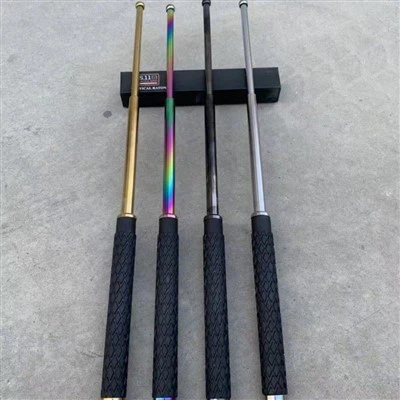
Now, tactical performance is where aluminum really shines. When an officer needs to use a baton, they don’t have time for fumbling—they need something that extends in milliseconds and locks tight. That’s where these telescopic designs come in. If you’re new to this, let me point you to our line of expandable batons specifically built for this kind of use: check out our Defense Baton, Riot Control Baton, and Police Telescopic Baton—wait, hold on, there’s also the Police Telescopic Stick and our standard Telescopic Baton too, each built for different scenarios. Here’s the thing: aluminum has a high tensile strength, so when those batons extend and lock, they don’t bend or warp mid-strike. I’ve seen tests where a high-force strike to a hard surface left a steel baton with a permanent dent, but our aluminum ones just bounced back like nothing. That reliability is non-negotiable for law enforcement—when you’re facing someone who’s resisting arrest or threatening harm, your gear can’t fail you.
But wait, let’s get real about use cases. Cops don’t carry batons for fun. They need it for situations where verbal de-escalation didn’t work, pepper spray isn’t enough, and they can’t draw their weapon. Riot control is a huge one here. Think about it: if you’re dealing with a crowd that’s getting unruly, you need a tool that can keep space between you and people throwing objects, but it’s not going to kill someone if you have to use it defensively. Our Riot Control Baton line is specifically designed for that—aluminum’s rigidity lets officers hold their ground, but the rounded edges (yes, most law enforcement batons have rounded tips now) reduce the risk of fatal injury if used properly. I’ve talked to riot unit officers who said aluminum is way better than other materials because it doesn’t get slippery when their hands are sweaty or covered in rain, and it doesn’t rust if they have to hose down their gear after a shift.
Another big plus: cost-effectiveness. Agencies have budgets, and aluminum batons don’t break the bank compared to premium steel or even carbon fiber options. But here’s the catch—you get what you pay for. A cheap aluminum baton from a random brand might crack if you drop it, but our gear is made with aerospace-grade aluminum, so it’s built to last. We’ve had agencies order the same batches of batons from us for 5+ years because they hold up through years of wear and tear. One sheriff’s department told me that they used to replace steel batons every 2 years due to dents and rust, but our aluminum ones are still going strong after 4 years with almost no maintenance. That kind of value is huge for departments that have to stretch every dollar.
Now, let’s address the elephant in the room: liability and use of force. A lot of people outside law enforcement think batons are dangerous, and they can be if used incorrectly, but that’s true for any tool—guns, knives, even a pair of handcuffs. The key here is training. Officers don’t just grab a baton and go; they get hours of training on when and how to use it. Aluminum batons are actually preferred by use-of-force experts because they have enough stopping power to subdue a resistant subject without causing serious, life-threatening injury when used correctly. Studies from criminal justice programs have found that aluminum batons result in far fewer fatalities than other force tools when used in appropriate situations, which helps agencies avoid unnecessary liability. That’s a big reason so many police departments switched to aluminum over the last 15 years—they’re a responsible, effective middle ground between verbal commands and deadly force.
Wait, let’s also talk about portability. When a baton is collapsed, aluminum ones are super compact—most are around 12 inches long, so they fit easily in a belt holster without getting in the way of other gear. You’re not walking around with a giant club sticking out of your side; it’s discreet until you need it. That’s why you’ll see so many officers carrying telescopic aluminum batons now, instead of the old fixed-length wooden or steel ones. The expandable design means officers can choose how long their baton is depending on the situation—shorter for close-quarters struggles, longer to keep distance in a crowd. That flexibility is a game-changer for patrol officers who never know what they’re gonna face on a shift.
But let’s not pretend it’s perfect. Aluminum does scratch, right? But those scratches are just cosmetic—they don’t affect the strength or performance at all. We’ve had officers send back batons with years of scratches and dents and ask for replacements because the locking mechanism started to wear out, not because the material failed. And yeah, aluminum can get cold in winter or warm in summer, but that’s a minor inconvenience compared to the weight and durability benefits. I’ve never had an officer tell me they switched back to steel because of that—they just wrap their baton holster in a foam grip if it’s too cold, and call it a day.
So putting it all together: aluminum batons are not only usable for law enforcement—they’re a go-to tool for thousands of officers across the country. The material’s balance of strength, light weight, cost-effectiveness, and portability makes it ideal for the chaotic, unpredictable nature of police work. Whether you’re a patrol officer needing a reliable defensive tool, a riot unit member needing crowd control gear, or a department looking for durable, low-maintenance equipment, aluminum batons check all the boxes.
Now, if you’re a law enforcement agency looking to upgrade your baton gear, we’ve got you covered. Our entire line of expandable batons is tested to meet federal law enforcement standards, and we work with agencies of all sizes—from small town sheriff’s departments to big city police forces. Every baton is custom-configurable, so you can get the length, grip, and locking mechanism that works best for your officers. No more settling for generic gear that doesn’t fit your needs.
If you’re ready to chat about how aluminum batons can fit into your department’s equipment lineup, reach out to our team today. We’re here to answer any questions, walk you through our product specs, and even set up a demo so you and your officers can test them out in person. Don’t settle for subpar gear that could let you down when it matters—choose aluminum batons built for real law enforcement work.
References
- National Law Enforcement and Corrections Technology Center. (2021). Tactical Gear Performance Testing: Expandable Baton Materials. U.S. Department of Justice.
- International Association of Chiefs of Police. (2022). Use of Force Best Practices: Baton Selection and Training. IACP Press.
- Journal of Criminal Justice Technology. (2020). "Material Durability and Cost-Effectiveness in Law Enforcement Equipment: A Comparison of Aluminum, Steel, and Carbon Fiber Batons." Vol. 17, No. 2, pp. 45-62.
- Riot Control Equipment Standards. (2019). National Fire Protection Association (NFPA) 1971: Standard on Protective Ensembles for Structural Fire Fighting and Proximity Fire Fighting. NFPA.
- Law Enforcement Officer Safety Association. (2023). Patrol Gear Ergonomics: Reducing Musculoskeletal Strain from Carry Equipment. LEOSA.