If you’ve ever wondered about the ins and outs of owning an expandable baton, you’re not alone. I get questions about this all the time—mostly from folks who work in high-risk jobs, run security teams, or just want a reliable self-defense tool for personal safety. As someone who runs a small expandable baton supplier, I’ve spent years digging through local, state, and federal laws (not to mention answering a million confused customer emails) to figure out exactly what you need to know before you buy. Let’s break this down straight—no legal jargon, just the real deal.
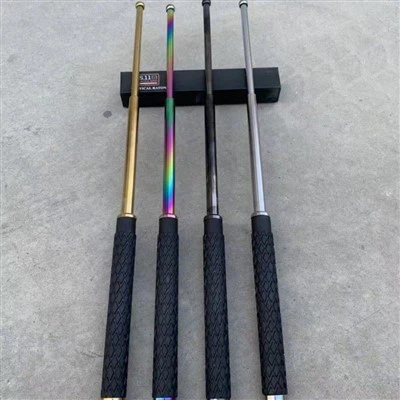
First off, let’s clarify what we’re even talking about when we say “expandable baton.” These are those sleek, telescopic tools that compact down to a pocket size and extend to a sturdy, hard-hitting length—way different than old-fashioned nightsticks or solid metal bats. The category covers a range of options too: Metal Telescopic Baton (tough, durable, great for heavy-duty use), Telescopic Baton (the all-purpose pick for most people), Aluminium Extendable Baton (lightweight, easy to carry), and even specialized ones like Riot Control Baton (made for crowd management in security or law enforcement). But no matter which you go for, the rules boil down to where you live, your job, and how you plan to use it.
Let’s start with the big one: federal laws in the U.S. Right now, there’s no nationwide ban on expandable batons, but there are key restrictions. The federal government classifies them as “dangerous weapons” in some contexts, so you can’t ship them across state lines to someone in a state that bans them, even if you’re just a regular person. Also, federal law prohibits people with felony convictions, domestic violence misdemeanors, or certain mental health histories from owning any weapon—expandable batons included. If you fall into those categories, don’t even bother looking into it; the penalties can be steep, and it’s just not worth the risk.
Now, the tricky part is state and local laws, because these vary wildly. I’ve seen states that have almost no restrictions, states that ban them entirely, and everything in between. Let’s go over the most common scenarios to give you a sense.


States where expandable batons are legal for most adults: Places like Texas, Florida, and California (wait, hold on—California’s rules are weird, I’ll get to that) let you own them as long as you’re 18 or 21 (most places require you to be at least 18, but some bump it to 21 for self-defense tools). You can carry them openly in most public spaces, though concealed carry might have extra hoops. But wait, California—yeah, I get a lot of questions from Cali customers. Their law says expandable batons are legal to own, but you can’t carry them concealed, and some cities have their own rules that ban them entirely. I had a customer in LA last year who ordered a baton, and his local city code slapped a ban on it—had to send it back. Moral of the story: check your city’s ordinances, not just your state’s.
Then there are states that ban them outright: Places like New York City, Chicago, Washington D.C., and some parts of Massachusetts. In NYC, for example, even owning an expandable baton is a misdemeanor if you don’t have a special permit for law enforcement or security. I had to turn down a bulk order for a NYC security team once because they couldn’t get the required city permit—they thought state law covered it, but D.C. and NYC have their own strict rules that override state laws. If you live in a city like that, don’t waste your time; it’s just not allowed for private citizens.
Next, job-specific rules. If you’re a security guard, bouncer, or peace officer, the rules change a lot. Most states require you to have a professional license to carry an expandable baton for work. For example, if you’re working as a bouncer in Illinois, you need a state-issued security license that specifically authorizes baton carry—just buying one and carrying it on the job without that license is a crime. Law enforcement officers usually get exemptions, but even they have to follow their department’s own policies, which might restrict where they carry it or how they store it off-duty. I work closely with a few security firms around the country, and we always provide documentation about state licensing requirements when we do bulk orders, because they need that for their team’s paperwork.
Then there are the use restrictions, not just ownership. Even if you can legally own one, you can’t use it as a weapon to harm someone unless you’re acting in self-defense. Most states allow you to use reasonable force to protect yourself or others from imminent harm, but hitting someone with a baton over a minor argument is assault, plain and simple. I always tell customers that these tools aren’t for starting fights—they’re for when you need to defend yourself, and using it inappropriately can lead to felony charges. Also, some places ban carrying them in certain spaces, like schools, government buildings, or airports. You can’t bring an expandable baton through airport security, obviously, and many colleges have policies that ban them on campus, even for students. I once had a college student order an aluminium extendable baton and try to have it shipped to his dorm—his school caught it and made him return it, so now I always add a note to order confirmations reminding people to check restricted locations.
Wait, what about other countries? A lot of my international customers reach out, and the rules are even stricter. For example, in the UK, expandable batons are classified as offensive weapons, and it’s illegal to own or carry them without a firearms certificate, which is almost impossible for private citizens to get. In Canada, you can own them, but you can’t carry them concealed or use them for self-defense—only law enforcement and authorized security can carry them. I had a customer in Toronto a few months ago who thought he could get one for personal protection, but he had to return it because Canadian law doesn’t allow that. If you’re outside the U.S., you need to check your country’s firearms and offensive weapons laws specifically for expandable batons—don’t assume they’re the same as U.S. rules.
Let’s talk about storage, too, because that’s a part of ownership that people often overlook. If you own an expandable baton, you need to store it in a way that keeps it out of reach of kids or unauthorized people. Many states have laws that hold you responsible if your baton is used in a crime by someone else because you didn’t store it properly. For example, if you leave your Aluminium Baton on your couch and your teen takes it to school to fight, you could be held liable. We always recommend a hard case or a locked drawer for storage, and we include a free carrying case with all our batons for that exact reason—makes it easy to keep it secure when you’re not using it.
Now, how do you make sure you’re following all the rules? The last thing I want is for a customer to get in trouble because they didn’t do their homework. My go-to advice is to start with your state’s attorney general’s website—they usually have a section on weapons laws that’s updated regularly. Then check your city or county’s municipal codes, because local rules are often more restrictive than state ones. If you’re a security professional, contact your state’s licensing board for security guards to confirm what’s required. If you’re buying for a team, we also work with clients to provide compliance documents that outline the legal requirements for their specific state, which takes a lot of the guesswork out of it. I’m not a lawyer, obviously, so I always recommend consulting a local attorney if you have specific questions—laws change, and it’s better to be safe than sorry.
Let’s wrap this up with a quick checklist for anyone considering owning an expandable baton: 1. Are you at least the minimum age (18 in most places, 21 in some)? 2. Do you have any felony or domestic violence convictions that would bar you from owning a weapon? 3. Is it legal in your state and city for private citizens to own one? 4. If you’re using it for work, do you have the required license or permit? 5. Do you know the restricted locations where you can’t carry it? 6. Do you have a plan for secure storage?
At the end of the day, expandable batons are useful tools for personal safety and professional security, but they come with real legal responsibilities. As an expandable baton supplier, our job isn’t just to sell high-quality products like metal telescopic batons or riot control batons—it’s to make sure our customers are informed and compliant with all the rules. If you’re a security team looking to outfit your staff, a private individual who’s done your research, or a business needing bulk compliant tools, we’re here to help. Get in touch with our team to chat about your needs, and we’ll walk you through every step to make sure you’re covered legally and get the right tool for you.
References:
- U.S. Department of Justice, Bureau of Alcohol, Tobacco, Firearms and Explosives (ATF) Firearms Laws: Weapon Definitions and Restrictions for Private Citizens
- National Conference of State Legislatures: State-by-State Laws on Expandable Baton Ownership and Carry (2024 Update)
- Major Cities Police Chiefs Association: Local Ordinances Restricting Expandable Baton Carry in U.S. Metropolitan Areas
- Canadian Firearms Program: Offensive Weapon Classification for Telescopic Baton Products
- UK Home Office: Offensive Weapons Act 2019 – Prohibited Items for Private Ownership