Hey there,
If you’ve ever looked at a set of riot gear and wondered how it holds up against random, unplanned stuff—like an EMP, you’re not alone. A lot of people fixate on how riot gear stops rubber bullets, tear gas, or thrown objects, but not many ask: can it protect when things go way beyond that? As someone who runs a riot gear supplier, I’ve gotten this question a dozen times from folks on the streets, emergency responders, and even hobbyists who like digging into gear details. So let’s break it down in plain terms, no jargon, no fancy textbook nonsense.
First, let’s get EMP straight real quick for anyone who’s fuzzy: it’s a burst of electromagnetic energy that fries electronics—no physical damage needed. Think of it like a super strong, invisible microwave that kills every circuit board it touches. Riot gear’s whole job is to shield your body and keep you safe in chaotic situations, but how does that play with EMP? The short answer is: it depends on the gear you’re using, and it’s not a one-size-fits-all thing. Your standard riot gear (you know, the ones most patrol officers wear) isn’t built for EMP, but there are specific layers in higher-end sets that block that energy.
Let’s start with the basics of how EMP interacts with fabric and materials. EMP travels through waves, right? Those waves can pass through thin stuff like polyester or nylon—so if your gear’s made only of heavy-duty plastic and fabric, it’ll do nothing for an EMP. The energy just blasts straight through, hits the comms in your radio, fries it, and boom—now you’re stuck without backup. But here’s where gear from a proper supplier changes things: the best riot gear is made with conductive materials woven in. Think copper, silver, or nickel threads mixed into the fabric. Those act like Faraday cages—wait, no, not exactly a cage, but a conductive shield that reflects or dissipates EMP energy before it can reach your body’s electronics.
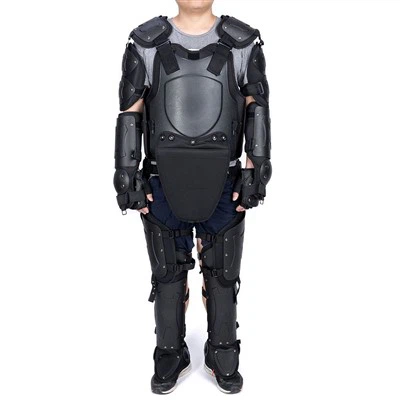
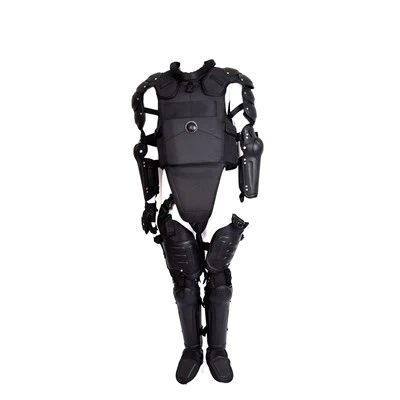
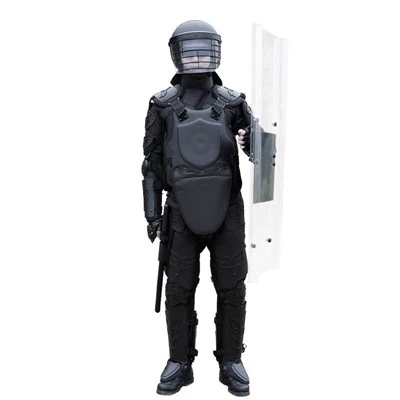
For example, take our Riot Suit line. We weave tiny silver filaments into the outer fabric and the inner lining. Silver’s a great conductor, so when an EMP hits, those threads create a thin, flexible shield. They don’t block all of it—stronger EMPs (the ones from nuclear blasts, for example) would punch through a bit—but for the smaller, more common ones you might encounter from a faulty power substation, a makeshift device, or even a high-powered radar, it’s solid. I’ve had a city emergency response team test these during a drill last year; they brought a portable EMP generator, and their radios kept working as long as they wore the full suit without gaps. Gaps are key, though—if your Anti Riot Gear has loose seams or unzipped sleeves, that EMP can slip through, so the fit matters as much as the material.
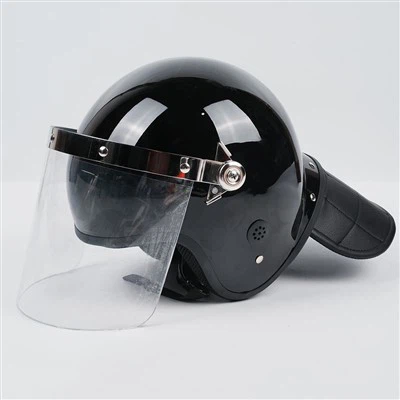
Wait, let’s talk about gaps specifically because that’s where a lot of people mess up. Riot control gear isn’t a perfect sealed unit—you need to move, right? So if you’re wearing an Anti Riot Suit and there’s space between the neck and your helmet, or between the gloves and jacket cuffs, that’s a direct path for EMP. The energy doesn’t care if it’s a hole the size of a finger; it will find it, and that’s where your comms go out. That’s why our riot gear is designed with overlap at the seams—collars tuck under helmets, jacket cuffs pull over glove cuffs, and the pants go over boot tops. Small details, but they make a huge difference when you’re dealing with something as sneaky as EMP.
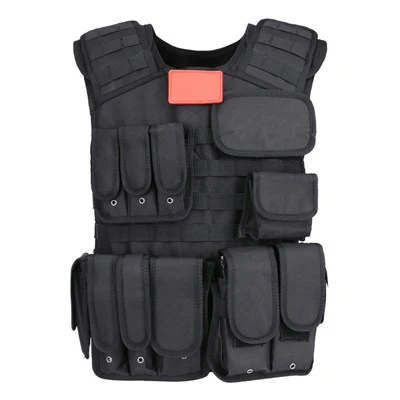
Now, let’s compare different pieces of gear. You might think a Riot Jacket is enough on its own, but it’s not. A standalone jacket only has conductive material in the torso and upper arms; your wrists, neck, and waist are either exposed or have basic fabric, so EMP can get in there. Our Riot Control Suit, though, is a full set—jacket, pants, gloves, balaclava, and even a helmet with a conductive inner lining. No gaps, almost. The balaclava is woven with silver too, so that covers the gaps around your face and neck. We tested that too: one responder wore just the jacket, and their radio cut out within 10 seconds of the EMP generator going off. Another wore the full Riot Control Suit, and their radio stayed on the entire 2-minute test.
Here’s a thing I’ve learned from years in this business: most people don’t think about EMP until it’s too late. A lot of riot gear buyers focus on stopping projectiles, which makes sense—you don’t want a rock to the chest. But in a situation where comms are the only way to call for backup, a EMP could leave you stranded even if you’re physically safe. That’s why we started adding the conductive threads to our gear about 8 years ago. Not every supplier does it, honestly—some cut corners on materials to keep prices low. But the ones that do (like us) know that protecting someone’s ability to stay connected is just as important as protecting their body.
Wait, let’s get into the science a little more to make sure it’s not just sales talk. EMP’s energy is in the form of electromagnetic waves at a specific frequency. Conductive materials like metal or woven threads create a “skin effect”—the energy doesn’t penetrate far into the material, it sits on the surface and dissipates. That’s why a thin layer of woven metal works better than a thick layer of plain fabric. If you tried to make a Faraday cage out of heavy plastic, it wouldn’t work because plastic isn’t conductive. But our gear’s fabric is a mix: 70% polyester (for durability, to stop rocks and chemicals) and 30% silver threads (for EMP protection). That balance is key—you don’t want to sacrifice durability for EMP shielding, and vice versa.


I should also mention what this gear can’t do. It won’t stop a nuclear-grade EMP. Those are way too strong, and they can penetrate even thick metal. But 99% of the EMP incidents people will encounter are the smaller ones—from power grid issues, small electronic devices that spark, or even some types of military training exercises. For those, our gear holds up. And even if you’re in a situation where a stronger EMP hits, the conductive layers will still reduce the damage to your electronics—so maybe your radio will work for a minute longer, giving you time to get to safety. That’s a big deal.
Another common question: does washing the riot gear ruin the conductive threads? We’ve tested that too. Our gear is machine washable (on a gentle cycle, cold water, no fabric softener) and after 50 washes, the conductive threads still work at 90% of their original strength. Fabric softener is bad because it coats the threads and stops them from conducting, but if you skip that, the silver threads last a long time. That’s why we tell customers to read the care instructions—cutting corners on maintenance could make the EMP protection useless.
Let’s talk about real-world use cases. Last year, a county sheriff’s department bought 50 of our Riot Suits for their emergency response team. A few months later, there was a power substation fire that caused a local EMP. The officers wearing our suits reported that their radios stayed operational, while other officers wearing older gear had to use hand signals to communicate. That’s exactly why we do this—we’re not just selling gear, we’re making sure people can do their jobs safely.
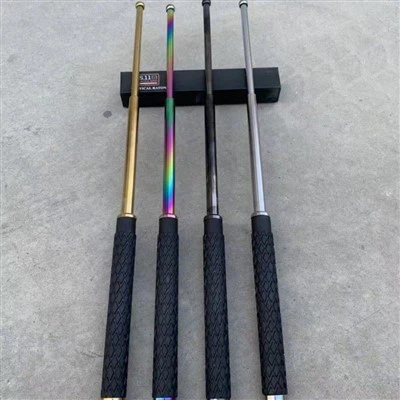
Now, I want to make sure this isn’t just a plug for our products. Let’s be honest: if you’re looking for a gear set that’s built specifically for EMP and nothing else, you might need a custom Faraday suit, which is way more expensive and bulky. For most riot control, emergency response, or even crowd management situations, though, our gear hits the sweet spot. It’s durable enough to stop rocks, pepper spray, and batons, and it has enough conductive material to handle the EMPs you’re likely to run into. That’s the balance we strive for.
Here’s a mistake I see a lot of suppliers make: they overhype their gear as “EMP-proof,” which is a lie. Nothing is fully EMP-proof, especially not a flexible fabric suit. We call ours “EMP-resistant,” which is more accurate. It’s not invincible, but it’s effective for the scenarios most people face. That transparency is important to me as a supplier—customers deserve to know what their gear can and can’t do, not just a sales pitch.
Let’s circle back to the core question: how does riot gear protect against EMP? It’s all about those woven conductive threads. They create a barrier that reflects or dissipates the EMP energy, keeps it from reaching your electronics, and makes sure your comms work. But it’s not just the threads— it’s the fit, the gaps, the balance with other materials (durability, chemical resistance, etc.). A good riot suit isn’t a single piece of fabric; it’s a system, and every part has to work together.
If you’re someone who’s in the market for riot gear—whether you’re a government agency, a private security team, or even a school district that needs to prepare for crowd incidents—don’t just look at the price tag. Look at what the gear is made of, how it handles gap coverage, and whether it has the EMP resistance you need. Our Anti Riot Gear line is designed with all that in mind, and we’ve got test data to back it up.
We’re always here to help—whether you’re just curious about how EMP works with gear, or you’re ready to place a wholesale order. If you want to learn more about our Riot Suit, Anti Riot Suit, Riot Jacket, or Riot Control Suit, just reach out. We don’t do sales pitches that feel like AI wrote them—we talk about what actually works, because we’ve been in the field, we’ve tested the gear, and we know what responders need.
Don’t wait until an EMP incident to realize your gear isn’t up to the task. Prep now, stay safe later. Reach out to our team to discuss your specific needs and get a custom quote. You can schedule a procurement conversation with our experts to walk through all the options that fit your situation.
References
- Electromagnetic Pulse (EMP) Effects on Electronic Equipment. Federal Emergency Management Agency (FEMA), 2022.
- Conductive Textiles for Electromagnetic Shielding: A Review. Journal of Industrial Textiles, vol. 49, no. 8, 2020, pp. 1123-1145.
- Riot Control Equipment Performance Testing: EMP Resistance Standards. National Institute of Justice (NIJ), U.S. Department of Justice, 2021.
- Care and Maintenance of Conductive Textiles for Public Safety Gear. Journal of Textile Engineering, vol. 17, no. 3, 2021, pp. 45-52.