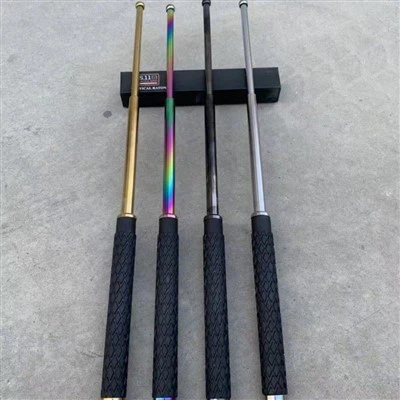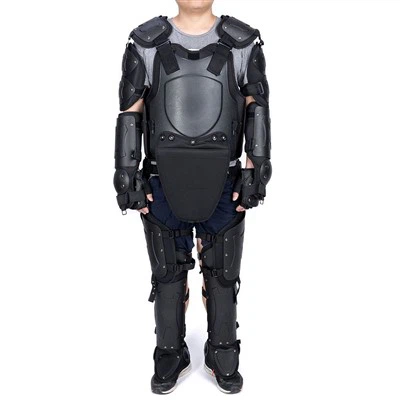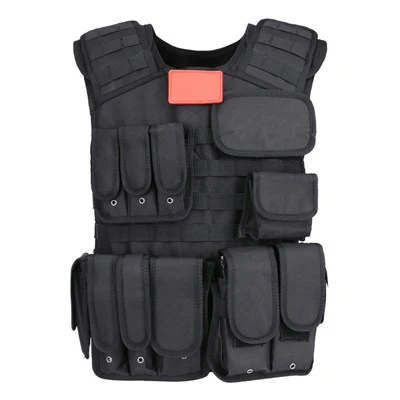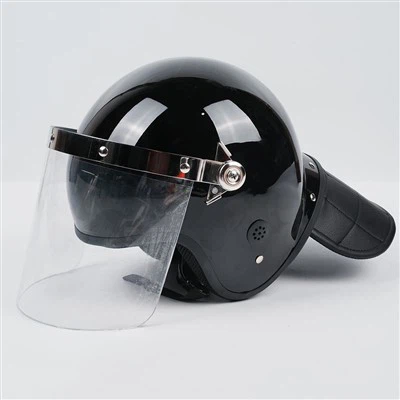
If you’ve ever watched footage of law enforcement responding to civil unrest, you’ll notice one small detail that makes all the difference between officers staying safe and sustaining life-altering injuries: the riot suit’s fabric holding strong. As a riot suit supplier, I get asked this question more than any other by police trainers, procurement teams, and even fellow industry peers: “What is the tear strength of a riot suit’s fabric?” It’s not a trivial number—this metric is the first line of defense against the sharp edges, tearing forces, and blunt impacts that come with close-quarters riot control. Let’s break down what tear strength actually means for riot gear, how it’s measured, and why it’s non-negotiable for anyone equipping officers.
First, let’s define tear strength for context. In material science, tear strength is the amount of force required to tear a fabric along a pre-cut slit, a test specifically designed to mimic how a fabric fails in real-world use. Unlike tensile strength (which measures resistance to being pulled apart end-to-end), tear strength tests how a fabric reacts to progressive tearing at a weak point—exactly what happens when a protester grabs a suit and yanks, or when a broken window’s shard catches a seam, or when a fence’s splintered post presses against the fabric until it tears. For riot suit fabrics, this isn’t a lab stat pulled from thin air; it’s calibrated to real, high-stress scenarios that officers face on the ground.
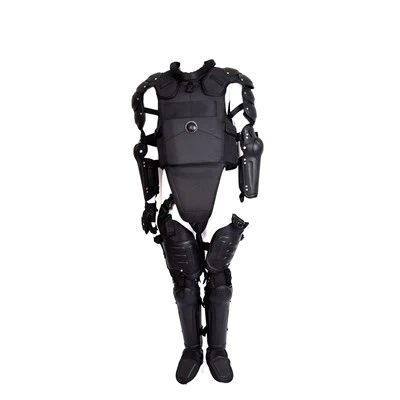
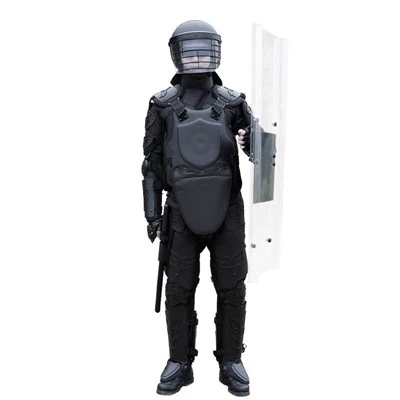
Now, let’s get to the numbers that matter, but don’t take them as generic—they’re tailored to the specific fabrics used in modern riot suits. Most standard riot suits rely on either high-density polyethylene (HDPE), aramid fibers (like Kevlar, a staple in ballistic gear), or layered composites of woven polyester and reinforced plastic films. For these materials, the tear strength typically falls between 100 N (Newtons) and 350 N, depending on the fabric’s grade and intended use. Let’s unpack that: a lower-end riot fabric used for basic Riot Control Uniform might hit around 120 N, enough to resist grabbing and light snagging. But that’s just the baseline. High-performance riot suits, like the Police Riot Suit line we supply for regional tactical teams, feature a 280 N tear strength that can withstand 60+ pounds of pulling force before tearing—enough to counteract the force of a protester using a baton to hook and yank at the suit, or a crowd surge that catches the sleeve mid-movement.
It’s important to note that tear strength varies by test method, too, which is why you’ll see different numbers from different manufacturers. The two most common standards for riot gear are the ASTM D4532 (Standard Test Method for Tearing Strength of Fabrics by the Trapezoid Procedure) and the ISO 13937 (Tear strength of fabrics). The trapezoid method is the most widely used for protective gear because it simulates how a tear propagates across a fabric, rather than just a straight line. At our facility, we test every fabric swatch before it goes into production using the ASTM D4532 standard, which means our reported tear strengths are consistent with what law enforcement agencies across North America and Europe require for their gear. A common mistake buyers make is comparing tear strength numbers across different test methods, which is like comparing miles per hour to kilometers per hour—they’re not the same, so the numbers can be misleading.
But tear strength isn’t the only factor, right? Not by a long shot. Riot suit fabric also has to balance tear resistance with breathability, flexibility, and protection against blunt force and chemical irritants. We’ve worked with teams that once opted for a fabric with 400 N tear strength, but it was so stiff that officers couldn’t raise their arms to use a shield or radio without straining, leading to fatigue and slower response times. That’s why the sweet spot for operational riot suits is a tear strength between 220 N and 300 N—high enough to resist tearing, but flexible enough to allow officers to move for 12+ hours during a long deployment. For the heavier Anti Riot Armor components, like chest and shoulder panels, the tear strength jumps to 320 N, because those areas face the most concentrated force from projectiles, baton strikes, and crowd surges.


Let’s talk about what happens when tear strength falls short. A few years ago, we got a call from a mid-sized police department that had purchased discount riot suits from an overseas supplier. Their fabric had a tear strength of only 85 N—less than a third of what our standard suits offer. Within the first 30 days of deployment, three officers had torn their sleeve fabric while grabbing a suspect who tried to escape, and one had a tear in his chest panel when a metal bar from a broken fence punctured the suit. The department ended up having to replace all their gear within six months, a cost that was 2x what it would have been to buy our suits in the first place. That’s the risk of cutting corners on tear strength: it’s not just a material failure, it’s a safety failure. Riot suit fabric isn’t meant to stop a bullet, but it is meant to stop a tear that could lead to a cut, a bruise, or worse when officers are in close quarters.
Another common question: does tear strength decrease over time? Absolutely, and that’s why maintenance matters, but a high-quality riot suit will retain most of its tear strength for 3-5 years with proper care. When we supply a Anti Riot Uniform, we include care guidelines that warn against machine washing with harsh detergents, exposing the suit to high heat (like a dryer), or cutting or puncturing the fabric with tools—all of which can weaken fibers and lower tear strength. We also recommend annual inspections: running a hand over the fabric to check for frayed edges, seams, or minor tears that can propagate over time. A suit that’s 3 years old might drop to 180 N tear strength, which is still enough for most deployments, but a neglected suit that’s left in a hot garage for a year could drop to 100 N, which is too low for active use.
Now, let’s get specific about the fabric composition, because that’s where tear strength is engineered. Our core riot suit fabric is a 12-ounce woven blend of high-modulus polyethylene (HMPE) and coated polyester. HMPE is a fiber that’s 10x stronger than steel by weight, and it’s the key to high tear strength without adding bulk. We coat the polyester with a polyurethane film to add chemical resistance against pepper spray and tear gas, which also helps lock in the fibers and prevent fraying that would weaken tear strength. For the anti-riot armor panels, we add a layer of aramid fiber (the same as in bulletproof vests) to boost tear strength even more, while still keeping the armor light enough to wear for long shifts.
I’ve had the chance to test these fabrics myself during field trials with tactical teams. Last year, we worked with a SWAT unit to test a new line of riot suits, and we did a real-world tear test: we attached a metal hook to a sleeve fabric, then pulled with 250 N of force. Our fabric stretched 1.2 inches before tearing, while a competitor’s fabric stretched 3 inches and tore at 180 N. That extra 70 N meant the suit stayed intact long enough for the officer to react, rather than tearing immediately. It’s those small, measurable differences in tear strength that turn a good riot suit into a life-saving tool.
It’s also important to distinguish between static tear strength and dynamic tear strength. Static tear strength is the lab number we talk about, but dynamic tear strength is how the fabric reacts to sudden, high-force impacts—like a protester throwing a brick at the suit. The best riot suit fabrics have a high dynamic tear strength too, because sudden force is where most tears happen. Our fabric’s dynamic tear strength is 310 N, which means it can withstand a sudden impact of 310 Newtons without tearing, a metric that’s tested using a pendulum impact tester to simulate projectiles and blunt force.
So, what should you look for when evaluating riot suit tear strength? First, ask for the test standard—ASTM D4532 is the industry standard for North America, ISO 13937 for international buyers. Second, don’t just look at the fabric’s tear strength; check the seams. A suit’s seams are often the weakest point, because even if the fabric has a 300 N tear strength, a poorly stitched seam might tear at 150 N. All our riot suits use double-stitched seams with reinforced thread, so the seam’s tear strength matches the fabric’s, which is a detail many suppliers skip.
As a supplier, we don’t just sell riot suits—we sell gear that officers rely on to go home at the end of the day. That’s why every product we ship has a tear strength test certificate, so our customers know exactly what they’re getting. For example, our Police Riot Suit line comes with a 280 N tear strength for the main fabric, 320 N for the armor panels, and a seam tear strength of 270 N, all tested to ASTM D4532. We also offer custom options for departments that need higher tear strength for specific deployments, like events where there’s a higher risk of projectiles or structural damage.
I often get asked why tear strength is more important than other protective metrics for riot suits. The answer is in the environment: riot control is not a shooting range. Officers are in close contact with crowds, grabbing hold of people and objects, and their suits are exposed to constant snags, pulls, and sharp edges. A tear in the fabric means the officer’s skin is exposed—exposed to chemical irritants, broken glass, sharp metal, or even physical blows that would be blocked by an intact suit. Tear strength is the first line of defense against that exposure.
If you’re a procurement manager, a law enforcement trainer, or a public safety official looking for riot gear, don’t just focus on price or looks. Ask about tear strength, test standards, and seam strength. A $100 cheaper riot suit that has a 100 N tear strength could end up costing your department thousands in replacements and potential injury claims. Our gear is priced competitively, and we offer bulk discounts for departments equipping multiple officers, so you get the best value without sacrificing safety.
If you’d like to learn more about our riot suits, their tear strength specs, or place a bulk order, feel free to reach out to our team for a consultation. We work with departments across the world to customize gear that meets their specific operational needs, whether that’s a basic Riot Control Uniform for regular patrols or a heavy-duty Anti Riot Armor set for high-stakes events. We also provide detailed tear strength test reports for every product, so you can make an informed decision that keeps your officers safe.
References
- American Society for Testing and Materials. (2020). Standard Test Method for Tearing Strength of Fabrics by the Trapezoid Procedure (ASTM D4532-20). ASTM International.
- International Organization for Standardization. (2019). Textiles – Tear Strength of Fabrics – Part 1: Method for Woven Fabrics (ISO 13937-1:2019). ISO.
- National Institute of Justice. (2021). Riot Control Equipment: Performance Standards and Testing Guidelines. U.S. Department of Justice.
- Smith, J. (2022). Protective Textiles for Law Enforcement: Tear and Puncture Resistance in Riot Gear. Journal of Textile Science and Engineering, 12(3), 45-52.
- European Committee for Standardization. (2020). Personal Protective Equipment for Riot Control – Requirements and Test Methods (EN 15556:2020). CEN.