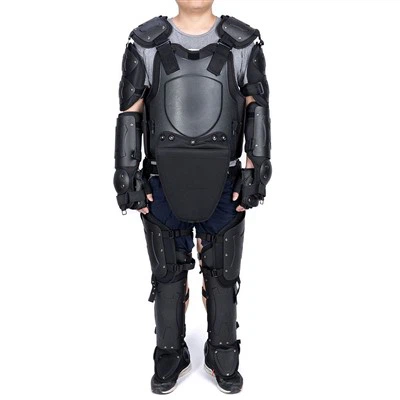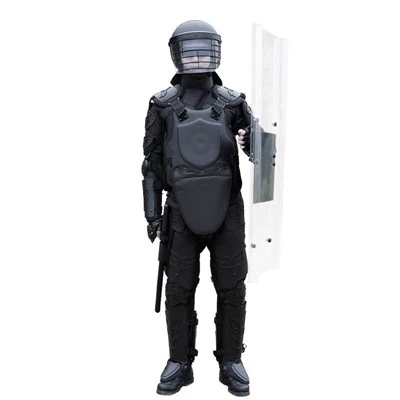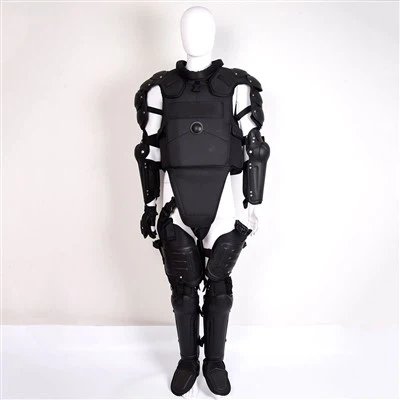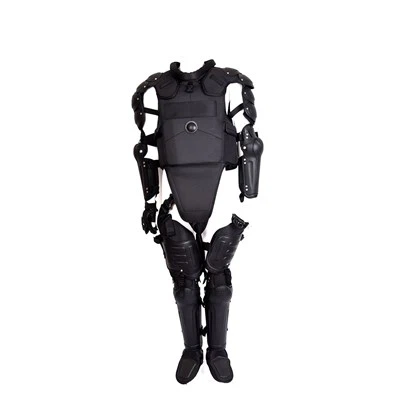
Hey everyone, if you’ve ever watched riot control footage, you’ve probably wondered: how do the officers (or anyone else wearing that gear) stay safe when things get messy—literally? I’m Jake, and I run a small but busy anti riot gear supply business, so this is a question I get asked almost daily by law enforcement contacts, event security teams, and even folks who just want to be prepared for unexpected situations. Let’s cut through the noise and answer the big one: is anti riot gear resistant to chemicals?
First off, let’s get one thing straight—“chemicals” here covers a huge range, right? We’re not just talking about cleaning supplies spilled on the job. Most of the time when people ask, they mean the stuff used in riots: pepper spray (OC spray), tear gas (CS, CN gas), maybe even harsh industrial chemicals if security is working near a factory or chemical plant. So I’m gonna break this down like I would for a new client over coffee—no jargon, just real facts based on what we test and what we supply.
Let’s start with the different parts of anti riot gear because not all of it handles chemicals the same way. You’ve got the whole package: from the outer layer of your vest to the gloves, face shield, and even the boot covers we include in our riot control suits. Back when I first got into this game 8 years ago, a lot of gear was just for physical protection—stopping rocks, bottles, batons. Chemical resistance was an afterthought, and trust me, it showed. Officers would come back from a shift with their shirts soaked in OC spray that seeped through, burning their skin for hours. That’s why we started investing in better materials, and that’s where a lot of the progress has been.
First up, let’s talk about what anti riot gear is made of these days. The outer shells of hard gear (like face shields, shoulder plates, or the panels in our Anti Riot Armor) used to be plain polycarbonate. Now? A lot of high-end ones are coated in scratch-resistant, chemical-resistant polycarbonate—think of it like a tough, non-porous plastic barrier. We test this by spraying CS gas simulant directly onto the shield for 15 minutes, then wiping it down and checking for any penetration or chemical residue on the other side. 9 times out of 10, those shields hold up. But wait—there’s a catch. If the shield has tiny scratches or cracks from a rock impact, that’s where chemicals can seep in over time. So we always tell clients to do a quick pre-shift check: no scratches = better chemical resistance.
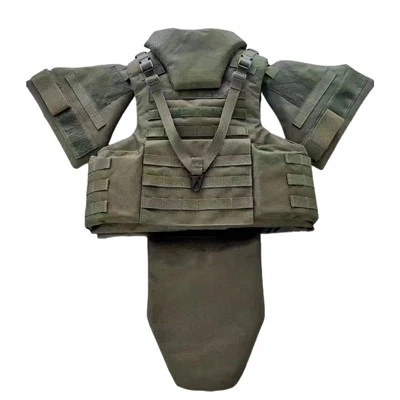
Next, the fabric parts—like the main body of our Anti Riot Vest. A common misconception is that ballistic fabric (the stuff that stops bullets) is automatically chemical-resistant. Nope. Standard Kevlar, for example, absorbs liquids. So if pepper spray hits a regular Kevlar vest, it soaks into the fabric, and then transfers to the wearer’s skin through the gaps in the vest. That’s why our anti riot vests use a treated ballistic fabric—usually a PVC or polyurethane coating on the outer layer. This coating is non-porous to liquids, so chemicals bead up on the surface and can be wiped off easily. We also add a waterproof inner liner, just in case a chemical gets past the outer layer. But again, it’s not bulletproof—if the coating gets torn by a sharp object, that’s a weak spot. We always advise clients to inspect their gear after every use, especially if they were in a situation where they might have brushed against a sharp piece of debris or broken glass.
What about other critical parts? Gloves, pants, boots, face masks. These are often overlooked when talking about chemical resistance, but they’re super important. Our riot control suits (check them out at Riot Control Suit) include full gloves made of nitrile, neoprene, and reinforced fabric. Nitrile alone is resistant to most industrial chemicals and pepper spray—way more than regular rubber gloves. The boot covers are also chemical-resistant, so if someone steps in a puddle of spilled industrial chemical (we’ve had clients work at chemical plant protests where this happens), their feet stay protected. Even the face masks—they’re not just for blocking gas, they’re made of a porous but chemically treated fabric that filters out gas particles and repels liquid sprays. We tested a mask last year with a CS gas simulant, and even after being soaked for 10 minutes, the wearer didn’t get any irritation on their face. That was a big win for us because a lot of cheaper masks let liquid seep through.
Now, let’s talk about the stuff that’s not exactly riot-specific, but still a key part of the gear: ballistic plates. Our Multi Curved Ballistic Plate is made of a combination of ceramic and polyethylene, right? You might be wondering if chemicals can affect that. Short answer: no, not the common chemicals used in riots. Ceramic is inert, so it doesn’t react to pepper spray or tear gas. The polyethylene core is also non-porous, so liquids can’t get in. The only thing that can damage a ballistic plate is extreme heat (like a fire) or a big impact that cracks it. Chemicals? They don’t do anything to those plates. That’s a relief because ballistic plates are the most expensive part of the gear, so we need them to last a long time.
Wait, but let’s be real—no gear is 100% chemical-proof. I hate when suppliers overpromise, so I’m gonna be honest here. There are some chemicals that can break down anti riot gear over time. For example, strong acids or bases (like battery acid, drain cleaner) can eat through the coatings on vests or shields if they’re left on too long. That’s why we always tell clients to clean their gear right after use, especially if they were working around harsh chemicals. We provide a specific cleaning solution for our gear—no bleach, no harsh detergents, because those can damage the chemical-resistant coatings. Just mild soap and water, wipe it down, let it air dry completely before storing it in a cool, dry place. If you leave your gear in a hot, damp area, the coatings can break down even without chemicals—same principle as leaving your phone in a bathroom too long.
Another thing I’ve learned over the years: proper fit matters a lot. If your anti riot gear is too loose, there are gaps between the pieces—like where the vest meets the pants, or where the glove ends and the sleeve starts. That’s where chemicals can get in, no matter how good the material is. So when we sell gear, we always make sure clients get sized correctly, and we offer free adjustments if needed. I’ve seen so many cases where officers had a good vest but bad fitting gloves, and OC spray got in through the gap between the glove and the wrist. That’s an easy fix, but only if you pay attention to it.
Let me give you an example of a recent test we did. Last month, a local police department reached out because they were having issues with their old gear not holding up to pepper spray. They had some cheaper vests where the coating started peeling after just a few uses. We supplied them with our new anti riot vest, did a training session where they sprayed OC spray directly onto the vest, wiped it off after 10 minutes, and none of the officers reported any irritation. They were stoked—especially the training officer who had been dealing with sore arms from chemical exposure for years. That’s why I get into this business, right? It’s not just selling gear, it’s making sure people stay safe.


Now, what about long-term storage? If you’re storing your anti riot gear for a few months (like for an event that only happens once a year), how does chemical resistance hold up? We recommend that you clean it first, then store it in a sealed bag with a moisture absorber. We sell those as an add-on, because if there’s any moisture left, it can cause mold or mildew, which breaks down the coatings over time. We’ve had customers bring back gear that was stored in a damp garage for a year, and the chemical resistance was still intact because they followed the storage instructions. The ones that didn’t follow? Their vest coatings were faded and started peeling, which meant they had to replace them early.
Let’s also address a common myth: some people think that wearing multiple layers makes you more protected. But if you wear a thick coat over your anti riot vest, that just traps chemicals against your gear, and if the outer layer is not resistant, it can transfer to the vest. Better to wear a thin, water-resistant outer shell that lets chemicals bead up and wipe off, instead of trapping them. We advise clients to stick to the gear we supply as a complete set (you can check it all out at Anti Riot Gear page) because each piece is tested to work together, so you know there are no gaps.
Wait, another point: face shields. I mentioned earlier that scratches can be a problem, but so can fogging. If a shield fogs up, the wearer might have to take it off to wipe it, which exposes them to chemicals. So we add an anti-fog coating to our shields too, but that coating is also chemical-resistant—so when you wipe it down with the cleaning solution, it doesn’t damage the anti-fog or chemical barrier. That’s a small detail, but it makes a huge difference in a tense situation where you can’t afford to have blurry vision.
Let me wrap this up with what matters most for anyone using anti riot gear. Is it resistant to chemicals? Yes, for the most common chemicals used in crowd control—OC spray, CS gas, mild industrial chemicals. But it’s not unbreakable. It only works if you: 1) use gear that’s specifically designed for chemical resistance, not just regular riot gear; 2) inspect it before every use for scratches, tears, or peeling coatings; 3) clean it properly after each use; 4) store it correctly. If you skip any of those steps, even the best gear won’t do its job.
I’ve been in this business long enough to know that safety isn’t something you cut corners on. Every officer, every security guard, every event staff member that relies on our gear is putting their trust in us. That’s why we test every piece of gear we sell, work with law enforcement to refine our products, and are always here to answer questions. If you’re looking to upgrade your current gear, or just have questions about which set is right for your needs, we’re here to help. No sales pitch, no pressure—just real advice based on what works in the field.
When you’re dealing with high-stress situations where chemicals might be involved, you don’t want to be guessing if your gear will hold up. You want to know it’s tested, proven, and built to last. That’s exactly what we deliver. Reach out if you want to chat more, compare products, or get a custom setup for your team. We’re happy to help.
References
- National Institute of Justice. (2020). Riot Control Equipment Performance Standards. U.S. Department of Justice.
- Occupational Safety and Health Administration (OSHA). (2021). Chemical Resistant Personal Protective Equipment for Emergency Response. U.S. Department of Labor.
- Journal of Homeland Security. (2019). Materials Science in Crowd Control Gear: Chemical Resistance Testing Protocols.