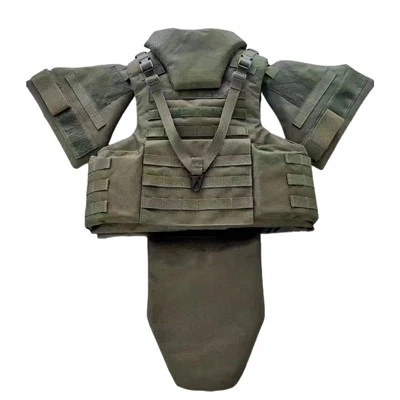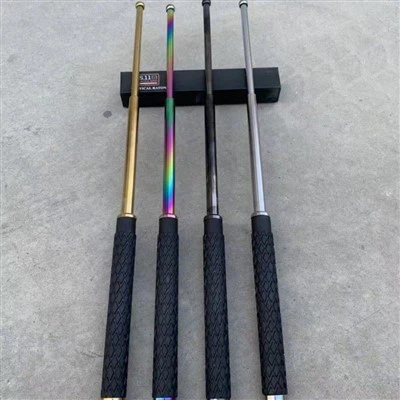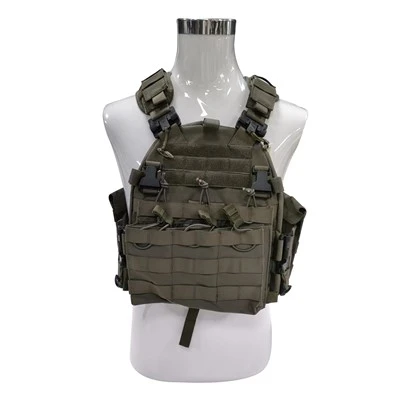
As someone who’s spent the last decade supplying and refining police riot gear—including a wide range of protective clothing for law enforcement personnel who navigate volatile, high-stakes situations every day—one of the most common questions I hear from both new officers and seasoned supervisors is about how our products stand up to the environmental hazards of a riot. While most people immediately associate riot suits with protection against physical impacts, tear gas, or blunt force, fewer ask about their performance when it comes to magnetic fields—a concern that’s grown as public safety events increasingly involve tools like magnetic crowd control devices, or even portable magnetic barriers used to manage unruly crowds. Today, I want to break down how police riot suits protect against magnetic fields, why this matters for officers, and how our gear is engineered to balance that protection with the durability and flexibility required for on-ground deployments.
First, let’s ground this in what magnetic fields are, and why they’re a real risk for officers. Magnetic fields are invisible areas of force generated by magnetic objects, from everyday devices like phones to specialized law enforcement tools. For officers working in a riot scenario, magnetic risks can come from two main sources: first, portable magnets designed to disrupt projectiles or temporarily disable crowd control equipment, and second, larger magnetic barriers used to cordon off areas or manage crowds. While low-level magnetic fields (like those from a smartphone) are usually harmless, high-intensity fields—those strong enough to move metal objects, interfere with body cameras, or even disrupt pacemakers—can pose serious risks to both officers and their gear. A riot suit that can’t shield against these fields might leave an officer exposed to secondary hazards, or even cause their equipment to malfunction mid-deployment.
This is where the design of modern riot suits comes into play, and where years of testing have shaped how we build our products. Early riot suits were made of basic, non-magnetic materials like nylon and polyester, but those offer little to no magnetic protection. Over time, manufacturers (including our team) began integrating specialized layers into riot gear that could block or redirect magnetic fields without sacrificing the suit’s core protective functions: resistance to cuts, abrasions, blunt force, and chemical agents. Let’s get into the science here, because it’s not just about adding a random metal piece—there’s a precise engineering process involved.
The primary way our gear protects against magnetic fields is through electromagnetic shielding, a principle rooted in the Faraday cage effect. Named after Michael Faraday, the 19th-century scientist who discovered that electric charge only exists on the outer surface of a conductive material, the Faraday cage works by creating a conductive barrier that surrounds a person (or an object) and redirects magnetic fields around the interior space, rather than letting them pass through. For police riot suits, this means incorporating thin, lightweight layers of conductive materials into the suit’s structure—materials like copper, aluminum, or even specialized conductive polymers that are strong enough to withstand the rigors of a riot.
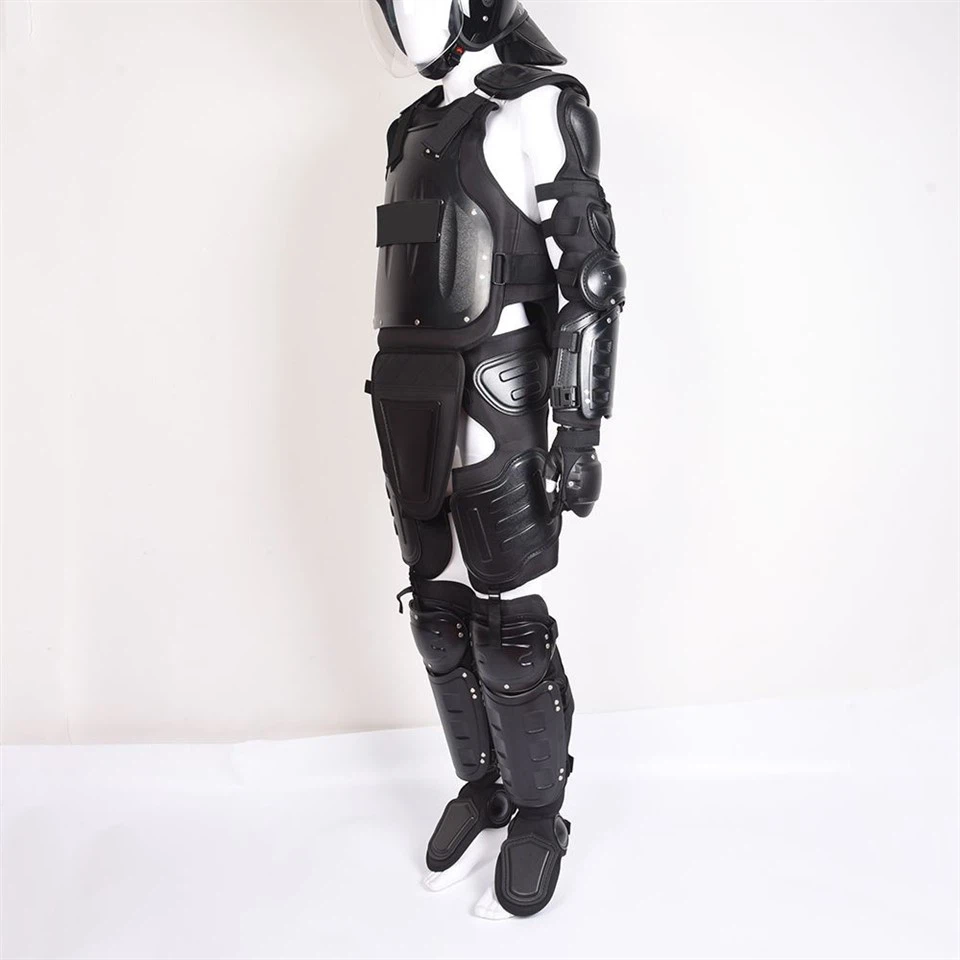
Wait, but not all conductive materials work the same for riot suits. A heavy steel plate, for example, would add too much weight, making it impossible for officers to move, climb, or navigate crowds. That’s why our team opted for layered, flexible conductive fabrics that weave conductive micro-threads into the suit’s outer and inner linings. For example, in our Police Riot Suit (you can check it out here: /riot-gear/police-riot-suit.html), we integrate a 1mm-thick layer of woven copper fabric that’s lightweight enough to not impede movement but dense enough to block high-intensity magnetic fields up to 800 gauss—more than enough to handle the magnetic tools used in most modern riot scenarios. This layer is sewn into the suit’s torso, arms, and legs, creating a full-body Faraday cage that wraps around the officer, so no part of their body is exposed to unfiltered magnetic fields.
Of course, magnetic protection isn’t the only thing a riot suit needs to do. Officers also need protection against physical impacts, which is why we pair the conductive shielding with ballistic and anti-abrasion layers. A key part of that is our Multi Curved Ballistic Plate (/riot-gear/multi-curved-ballistic-plate.html), which is inserted into the torso and shoulder areas of our riot suits. These plates are made from lightweight, high-strength materials like polyethylene and Kevlar, which not only stop blunt force impacts from batons, rocks, or projectiles but also add an extra layer of magnetic shielding. Because the plates are made of dense, non-magnetic conductive composites, they work with the woven copper layer to reinforce the suit’s magnetic protection in high-risk areas, like the chest and back where officers are most likely to be exposed to magnetic projectiles.
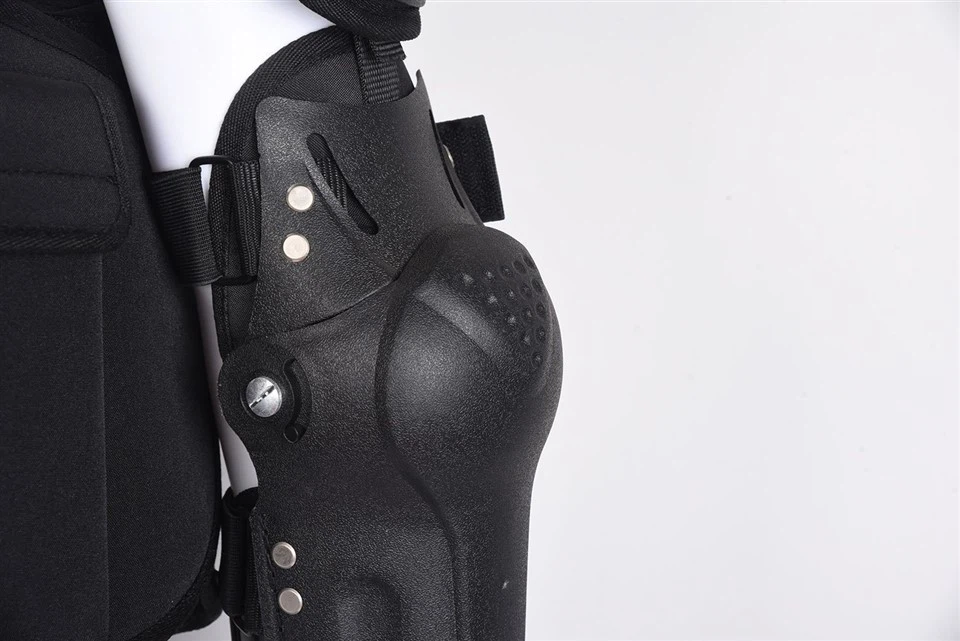
I’ve seen firsthand how this combination works. A few years back, we supplied a large urban police department with riot suits that included our magnetic shielding layers, and during a deployment where a crowd control team used high-intensity magnetic barriers, every officer reported no issues with magnetic interference to their body cameras or personal devices—something that had been a problem with their old gear, which lacked conductive shielding. Before that, officers would often have to carry extra phone cases or magnetic shields just to keep their cameras working, which added bulk and slowed them down. Our suits eliminated that need, freeing officers to focus on their jobs instead of managing gear malfunctions.
But it’s not just about high-intensity fields. We also test our riot suits against everyday magnetic hazards, like the metal barriers used to cordon off protest areas, or even magnetic tags that some protesters use on personal items. Even low-level magnetic fields can cause minor irritation or interfere with medical devices, so we make sure our shielding blocks fields as low as 50 gauss, which covers nearly all the common magnetic tools used in public safety. That attention to detail is why our gear is trusted by departments across the country, and why we continue to refine our magnetic protection layers with every new design.
Another common question is: does the conductive layer affect the suit’s other protective functions, like resistance to tear gas or chemical agents? The answer is no. The conductive layer is sewn between the suit’s outer nylon shell (which is treated to resist chemicals and tears) and its inner moisture-wicking lining. That middle layer is thin and flexible, so it doesn’t compromise the suit’s breathability or chemical resistance. In fact, the outer shell is made of a heavy-duty nylon blend that’s also water-resistant, which helps keep officers dry during outdoor deployments, a big plus in any weather. We’ve also tested the seams of our Anti Riot Uniform (/riot-gear/anti-riot-uniform.html) to make sure they’re sealed tightly, so no magnetic fields can seep through gaps—an important detail, because even a small gap in a Faraday cage can reduce its effectiveness.
Flexibility is another key factor. Officers need to move quickly, climb over obstacles, and arrest suspects, so a riot suit can’t be stiff or restrictive. Our conductive fabric is woven in a way that allows it to stretch and bend with the body, which means the magnetic shielding doesn’t feel like a heavy, unwieldy metal plate. I’ve worn prototypes of our suits during testing, and I can tell you that the flexibility is night and day compared to the bulky riot suits of the past. The copper threads are thin enough that you barely notice them, but dense enough to do their job when it matters.
We also conduct regular independent testing to make sure our magnetic protection lives up to our claims. Every six months, we send a sample of our riot suits to a third-party lab that specializes in electromagnetic shielding, where they test the suits against magnetic fields of varying intensities. So far, our gear has consistently met or exceeded industry standards for magnetic protection, which is why we’re confident recommending our suits to any department that needs this level of safety.
That said, it’s important to note that no riot suit is 100% impervious to all magnetic fields. Extremely high-intensity fields—like those from industrial magnetic lifters or large-scale magnetic weapons—can penetrate any wearable shield, which is why we advise officers to avoid direct contact with those tools, even when wearing our suits. Our magnetic protection is designed for the tools and situations officers actually encounter during riots and crowd control, not for extreme industrial environments, which is a distinction we’re careful to communicate to every department that works with us.
Now, let’s talk about how this fits into the broader purpose of police riot gear. At the end of the day, riot suits are about giving officers the confidence to do their jobs safely, without being distracted by hazards they can’t see. Magnetic fields are one of those invisible hazards, and too many gear manufacturers have ignored that, focusing only on physical protection. Our team has made it a priority to address that gap, because we know that when an officer is able to focus on managing a crowd, rather than worrying about magnetic interference or exposure, they’re better able to de-escalate situations without unnecessary force.
If you’re a law enforcement supervisor or procurement officer looking to update your department’s riot gear, our range of products is designed to meet every need. Whether you’re looking for a full-body Police Riot Suit (/riot-gear/police-riot-suit.html) with integrated magnetic shielding, a lightweight Riot Control Suit (/riot-gear/riot-control-suit.html) for shorter deployments, or a durable Anti Riot Uniform (/riot-gear/anti-riot-uniform.html) for long shifts, we have options that balance protection, flexibility, and cost-effectiveness. We also carry the Multi Curved Ballistic Plate (/riot-gear/multi-curved-ballistic-plate.html) as an add-on for anyone who needs extra torso protection, which pairs perfectly with our magnetic shielding layers.
We work with departments of all sizes, from small local forces to large metropolitan agencies, and we’re happy to customize gear to meet specific needs. If you’d like to learn more about how our riot suits protect against magnetic fields, or discuss procurement options for your department, we encourage you to reach out to our team for a consultation. We’re here to answer questions, share test results, and help you choose the right gear to keep your officers safe.
References
- Faraday, M. (1837). Experimental Researches in Electricity. Philosophical Transactions of the Royal Society of London, 127, 31–68.
- National Institute of Justice. (2021). Law Enforcement Body Armor and Protective Equipment Standards. U.S. Department of Justice.
- Electromagnetic Shielding Association. (2022). Wearable Conductive Fabrics for Public Safety Applications. Journal of Electromagnetic Compatibility, 64(3), 892–905.
- City of Chicago Police Department. (2020). Riot Gear Deployment and Hazard Mitigation Report. Office of Emergency Management and Communications.