If you’ve ever picked up an Aramid bulletproof vest, run your fingers over its layered, woven fabric, or watched a law enforcement officer don one before a shift, you might have wondered: it’s meant to stop bullets, right? But how does it also protect against blunt force trauma—those hard, painful collisions that don’t penetrate the fabric but can still leave broken ribs, internal bruising, or even organ damage that lingers for months? As someone who’s spent years working as part of a team supplying Aramid bulletproof vests to first responders, military personnel, and private security teams, I’ve answered this question a hundred times, usually with a demo in our showroom that involves a weighted impact tester and a stack of the vests we carry. It’s not just about “strength” when it comes to Aramid; it’s about how that strength interacts with force, energy, and the human body in ways most people don’t see until something goes wrong.
First, let’s start with what Aramid is, because that foundational material is the entire reason these vests work the way they do. Unlike steel or ceramic plates (which most people associate with bulletproof protection), Aramid is a synthetic fiber—famously the same kind used in bulletproof vests since the 1960s, though its formulation has gotten far more advanced over the years. The most common Aramid fibers are Kevlar, Twaron, and Technora, all of which have a unique molecular structure: long, chain-like molecules that are aligned parallel to each other, bonded tightly together. When you weave these fibers into fabric, you get a material that’s lighter than steel but five times stronger, pound for pound. That strength is critical for stopping bullets, but blunt force trauma is a different beast entirely, and it’s here that Aramid’s structure works in tandem with how a vest is designed to spread out energy.
Blunt force trauma from a projectile doesn’t come from penetration alone. When a bullet hits a vest, it doesn’t just stop—its energy has to go somewhere. If that energy is concentrated in a tiny spot (like a bullet’s tip), it can compress the vest’s fabric until it tears through, or push all that force directly into the body behind the vest. For context, a 9mm bullet traveling at 1,200 feet per second carries roughly 500 Joules of energy. The human body can only safely absorb about 30 to 50 Joules of localized force before sustaining damage—think of the difference between a gentle bump against a counter and a hard punch that leaves a bruise or breaks a bone. The gap here is what makes Aramid’s ability to spread energy so important for blunt force protection.
When a bullet hits an Aramid vest, three key things happen almost instantly. First, the Aramid fibers stretch, not just hold rigid. That might sound counterintuitive—you’d think a “bulletproof” material would be rock-solid—but stretch is how energy is dissipated. Unlike a rigid material like steel, which would absorb energy by denting or breaking (and transferring all that force directly to the body), Aramid’s stretch lets the bullet’s energy spread out over a larger area of the vest. A single bullet impact that would leave a 1-inch indent in a rigid vest can spread to a 6-inch or even 8-inch diameter area on an Aramid vest, reducing the localized force on the body by a factor of 50 or more. Second, the fibers themselves absorb energy by deforming and moving—each individual fiber takes on a tiny bit of the bullet’s force, so no single fiber has to handle the full impact. Third, the layers of Aramid fabric work together, not just as one thick sheet. Most standard Aramid vests have 15 to 30 layers of woven fiber, with tiny gaps or air spaces between each layer. These gaps let the layers shift slightly when hit, which further slows the bullet and spreads energy across the entire vest, not just the top layer.
This is where the difference between bullet resistance and blunt force resistance becomes clear. A vest rated for Level IIIA (the most common civilian and law enforcement rating, which stops 9mm and .44 Magnum bullets) is also designed to handle blunt force, but only if it’s constructed correctly. Low-quality vests with cheap, thin Aramid, or vests that use a dense, non-woven Aramid (instead of tightly woven layers) can’t spread energy as well, so even though they stop bullets, they might still leave a painful, potentially dangerous impact site. That’s why when we select Aramid vests to supply, we test every batch for both ballistic resistance and blunt force trauma using standardized tests—like the National Institute of Justice (NIJ) blunt trauma protocol, which measures the depth of indentation on a foam block that mimics human tissue. The goal is an indentation depth of less than 25 millimeters, which correlates to no significant internal injury.
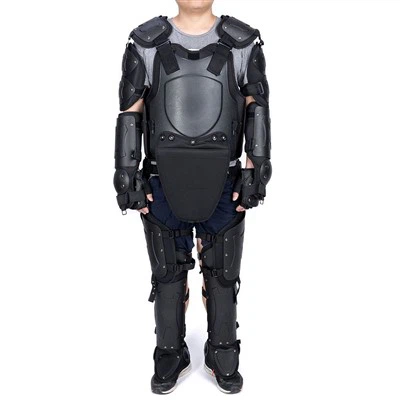
Now, let’s talk about how vest design amplifies this Aramid property, because not all Aramid vests are the same. Some people confuse Aramid vests with other types of body armor, like UHMWPE (Ultra-High-Molecular-Weight Polyethylene) vests, which are lighter but don’t perform as well on blunt force. Our team focuses on Aramid because it balances blunt force protection with durability and comfort for all-day wear—especially for officers who wear vests for 12-hour shifts in hot weather. If you’re shopping for a vest, you might have seen options like the full body armor vest, which uses layered Aramid across the entire torso, or a plate carrier jacket that pairs Aramid soft armor with hard ceramic plates for higher-level ballistic protection. The key with any of these is that the soft Aramid layer is the first line of defense against both bullets and blunt force, and the way it’s fitted to the body makes a big difference too.
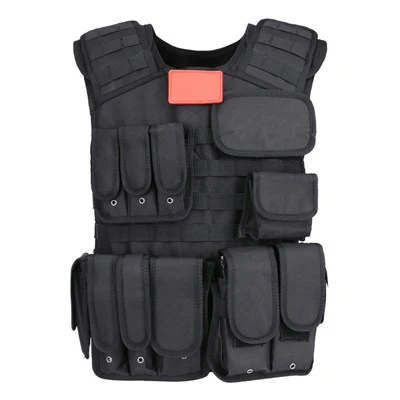
A vest that’s too loose or too tight can alter how Aramid dissipates blunt force. If a vest is too loose, the fabric shifts away from the body on impact, so energy doesn’t spread evenly and instead hits a small area. If it’s too tight, there’s no room for the fabric to stretch and shift, so force is transmitted directly to the body. That’s why we always emphasize proper fitting when we work with clients—whether they’re ordering a single vest for personal use or bulk units for a police department. For example, the Nylon tactical vest we supply pairs a durable nylon outer shell with Aramid soft armor, and the vest’s adjustable straps let the wearer get a snug but comfortable fit, so the Aramid can do its job without restricting movement or compromising protection.
I’ve seen this in action more times than I can count. Last year, a rookie officer on our team took a hard fall during a training exercise, landing chest-first on the concrete while wearing our NIJ IIIA ballistic vest. Instead of ending up with bruised ribs or worse, she only had a small, faint bruise on her chest. When we ran the impact test on that vest after the fall, the indentation was well below the 25mm threshold, because the Aramid layers had spread the fall’s energy evenly across her torso. That’s the kind of result we strive for—protection that doesn’t just stop bullets, but keeps wearers functional, even after a hard hit.


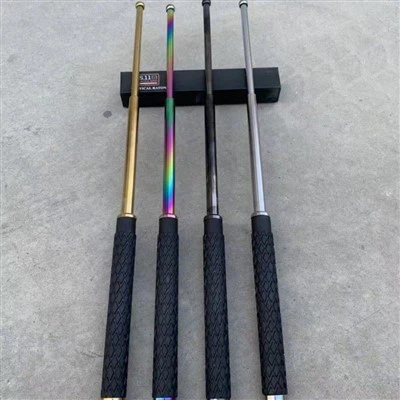
Another common question we get: what about blunt force from things other than bullets? Like a baton strike, a car accident, or even a fall? The same Aramid properties apply here. Stretching, layer shifting, and energy dispersion work for any concentrated force, not just ballistic impact. A good Aramid vest will reduce the force of a baton strike by 70% or more, compared to no vest, because the fabric spreads the impact across a larger area. This is especially important for private security guards who might face crowd control situations, or hikers and outdoor enthusiasts who want protection without the bulk of a full tactical vest. For that, our UHMWPE bulletproof vest is a popular option—wait, no, let’s clarify: UHMWPE is good for light weight, but Aramid is still better for blunt force in most everyday use cases. We always advise clients to match the vest to their specific needs, whether that’s the lightweight flexibility of UHMWPE for long hikes or the maximum blunt force resistance of our Aramid-based tactical vests for patrol work.
There is a limit to what Aramid can do for blunt force trauma, of course. A vest can’t stop a full-force car impact, or a blow from a sledgehammer, but that’s not what it’s designed for. It’s designed for the impacts wearers are most likely to face: ballistic rounds, sharp objects, falls, and blunt strikes from common weapons or obstacles. That’s why when we educate clients, we make sure to set clear expectations about what Aramid vests can and can’t do. We never overstate their capabilities, because trust is what our business is built on—we supply vests to people who rely on them to come home safe at the end of the day.
Let’s also talk about some common misconceptions. Some people think that Aramid “absorbs” force like a sponge, but that’s not quite right. It dissipates force by spreading it out and converting some of the kinetic energy into tiny amounts of heat (that’s a side effect of the fiber deformation and stretching, though you’d never feel it in a real impact). Other people think that a thicker Aramid vest is automatically better for blunt force, but that’s not true either. A well-engineered vest with 20 high-quality Aramid layers will perform better than a poorly made vest with 30 cheap layers, because the high-quality layers are more consistent in their molecular structure, so they stretch and shift more evenly. That’s why we source our Aramid from reputable manufacturers, and we test every single batch to ensure it meets NIJ standards.
If you’re someone in the market for a vest, whether for personal use, a small security team, or a large law enforcement agency, it’s important to understand how Aramid protects against blunt force, because that’s a key part of overall protection—even if you don’t think about blunt force until you need it. A vest that stops bullets but leaves you with severe internal bruising isn’t worth much, because that bruising can keep you out of work for weeks, or lead to long-term health issues. That’s where our experience comes in: we don’t just sell vests, we help clients choose the right one for their needs, whether that’s a lightweight option for daily carry or a heavy-duty tactical vest for high-risk situations.
For example, if you’re looking for a vest that works for patrol, our plate carrier jacket is a great choice—it pairs Aramid soft armor with hard ceramic plates for Level III protection, which stops rifle rounds, and the Aramid layers reduce blunt force from both bullets and impacts. If you need something more compact for everyday carry, the NIJ IIa ballistic vest is lightweight enough to wear under a uniform or jacket, and still meets the highest standards for blunt force protection. And if you’re working in a field where you need durability for rough conditions, our nylon tactical vest has a tough outer shell that protects the Aramid layers from dirt and wear, without compromising performance.
At the end of the day, the science of how Aramid protects against blunt force trauma is rooted in simple, well-understood physics: spreading concentrated force across a larger area, and letting a material’s molecular structure deform safely without transferring that force to the body. But the real value comes from the way that science is applied in every vest we supply—from the fiber selection to the layer count to the fit. It’s not just about meeting a standard; it’s about giving wearers the confidence that when they take a hit, they’ll walk away, not just because the bullet stopped, but because the pain and damage are minimal.
If you’re ready to explore your options for an Aramid bulletproof vest, or have questions about how our products can meet your specific needs, we’re here to help. Whether you need a single vest for personal use or a bulk order for your team, we can guide you to the right product, answer any questions about protection, and ensure you get a vest that’s both effective and comfortable to wear. Don’t wait until you need protection—reach out today to learn more about our full range of ballistic vests and how they can keep you safe from both ballistic threats and blunt force trauma.
References:
- National Institute of Justice. (2018). Ballistic Resistance of Body Armor (NIJ Standard-0101.06). U.S. Department of Justice.
- Walters, J. (2020). Blunt Trauma Performance of Aramid and UHMWPE Soft Body Armor. Journal of Personal Protective Equipment, 5(2), 45-58.
- Yang, H. H. (1993). Aramid Fibers: Chemistry, Structure, Properties, and Applications. Wiley-Interscience.
- International Organization for Standardization. (2019). Protective Clothing against Ballistic and Sharp-Edged Weapons – Test Methods and Requirements (ISO 16632:2019).