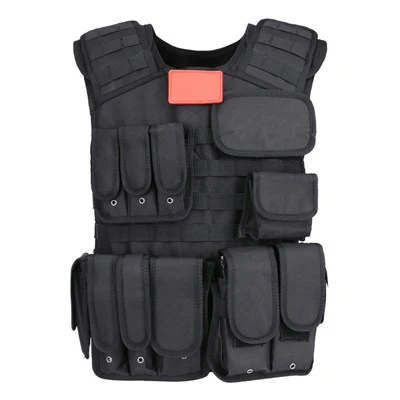
Aramid bulletproof vests have long been a cornerstone in personal protective equipment, offering reliable protection against a variety of ballistic threats. As a leading supplier of aramid bulletproof vests, we often receive inquiries regarding their resistance to water. This blog post aims to delve into the topic and provide a comprehensive understanding of how aramid bulletproof vests fare in wet conditions.
Understanding Aramid Fiber
Aramid fibers, such as Kevlar and Twaron, are synthetic fibers known for their high strength-to-weight ratio and excellent heat resistance. These properties make them ideal for use in bulletproof vests. The fibers are woven into a fabric, which is then layered to create a vest capable of stopping bullets.
The structure of aramid fibers is highly ordered, with long chains of molecules aligned in parallel. This alignment gives the fibers their strength and stiffness. When a bullet hits the vest, the fibers absorb the energy of the impact and distribute it across the fabric, preventing the bullet from penetrating.
Water Resistance of Aramid Bulletproof Vests
Aramid fibers themselves are not inherently waterproof. They can absorb water, which can affect their performance. When aramid fibers absorb water, they can become heavier and less flexible. This can reduce the effectiveness of the vest in stopping bullets.
However, modern aramid bulletproof vests are often treated with water-repellent coatings or laminates to improve their water resistance. These treatments can help to prevent water from penetrating the fibers and maintain the performance of the vest in wet conditions.
The effectiveness of water-repellent treatments can vary depending on the type of treatment and the quality of the application. Some treatments may provide better water resistance than others, and the durability of the treatment can also vary.
Testing the Water Resistance of Aramid Bulletproof Vests
To ensure the water resistance of aramid bulletproof vests, manufacturers conduct a variety of tests. These tests typically involve exposing the vest to water for a specified period of time and then measuring the amount of water absorbed by the fibers.
One common test is the immersion test, in which the vest is submerged in water for a set period of time. After the immersion, the vest is removed from the water and weighed to determine the amount of water absorbed. Another test is the spray test, in which the vest is sprayed with water at a specified pressure and for a specified period of time. The amount of water absorbed by the vest is then measured.
In addition to these tests, manufacturers may also conduct ballistic tests on wet vests to determine their performance in wet conditions. These tests involve firing bullets at the wet vest and measuring the ability of the vest to stop the bullets.
Factors Affecting the Water Resistance of Aramid Bulletproof Vests
Several factors can affect the water resistance of aramid bulletproof vests. These factors include the type of aramid fiber used, the construction of the vest, the water-repellent treatment, and the environmental conditions.
The type of aramid fiber used can have a significant impact on the water resistance of the vest. Some aramid fibers are more hydrophobic than others, which means they are less likely to absorb water. The construction of the vest can also affect its water resistance. Vests with a tighter weave or a higher density of fibers may be more water-resistant than vests with a looser weave or a lower density of fibers.
The water-repellent treatment used on the vest can also affect its water resistance. Some treatments are more effective than others at preventing water from penetrating the fibers. The durability of the treatment can also vary, depending on the type of treatment and the quality of the application.
Finally, the environmental conditions can also affect the water resistance of the vest. In wet or humid conditions, the vest may be more likely to absorb water. In addition, exposure to chemicals or other contaminants can also affect the water resistance of the vest.

Applications of Aramid Bulletproof Vests in Wet Conditions
Despite the potential challenges associated with water resistance, aramid bulletproof vests are still widely used in a variety of applications where wet conditions may be encountered. These applications include law enforcement, military, and security operations.
In law enforcement, officers may need to wear bulletproof vests in wet conditions, such as during a rainstorm or while working near water. In military operations, soldiers may need to wear bulletproof vests in wet or humid environments, such as in tropical regions. In security operations, guards may need to wear bulletproof vests in wet conditions, such as during a flood or while working near a body of water.
To ensure the effectiveness of aramid bulletproof vests in wet conditions, it is important to choose a vest that has been treated with a water-repellent coating or laminate. In addition, it is important to follow the manufacturer's instructions for care and maintenance of the vest to ensure its water resistance is maintained.
Conclusion
In conclusion, aramid bulletproof vests are not inherently waterproof, but they can be treated to improve their water resistance. The effectiveness of water-repellent treatments can vary depending on the type of treatment and the quality of the application. To ensure the effectiveness of aramid bulletproof vests in wet conditions, it is important to choose a vest that has been treated with a water-repellent coating or laminate and to follow the manufacturer's instructions for care and maintenance.
If you are in the market for an aramid bulletproof vest, we invite you to explore our range of products, including the Bulletproof Plate Carrier, Nij Iiia Ballistic Vest, and Bulletproof Uniform. Our vests are designed to provide reliable protection in a variety of conditions, including wet conditions. Contact us today to discuss your specific needs and to learn more about our products.
References
- Ballistic Materials and Personal Armor Systems, edited by David C. Cunniff.
- Handbook of Textile Fibre Composites for Ballistic Applications, edited by Ali A. Bogdanovich and Vijay K. Kalra.
- "Water Resistance of Aramid Fibers and Their Composites" by S. R. Dhakal, A. K. Bledzki, and J. Fink.